
Let’s talk about Mary: an Awakening of Terror, by Nat Cassidy. This book, about a middle-aged woman going through perimenopause, is written by a man. A straight cisgender man, even. Nat is aware this might be weird, and he talks about it before we even start the story (and again at the end). I can’t say that as a man he perfectly captures the experience of middle-aged women. He only partially captures the weirdness of menopause and the female midlife crisis (both of which I have some experience with). But it’s a good effort and I enjoyed this book a lot. Unless you love romance, you’re not gonna see middle-aged women featured much in books and movies. They’ll get supporting roles but the stories are rarely about them. This story, and I give it a lot of credit for this, is definitely about Mary and a slew of other women her age. It’s wholly centered and focused on their feelings and experiences and it works to represent them in real and individual ways.
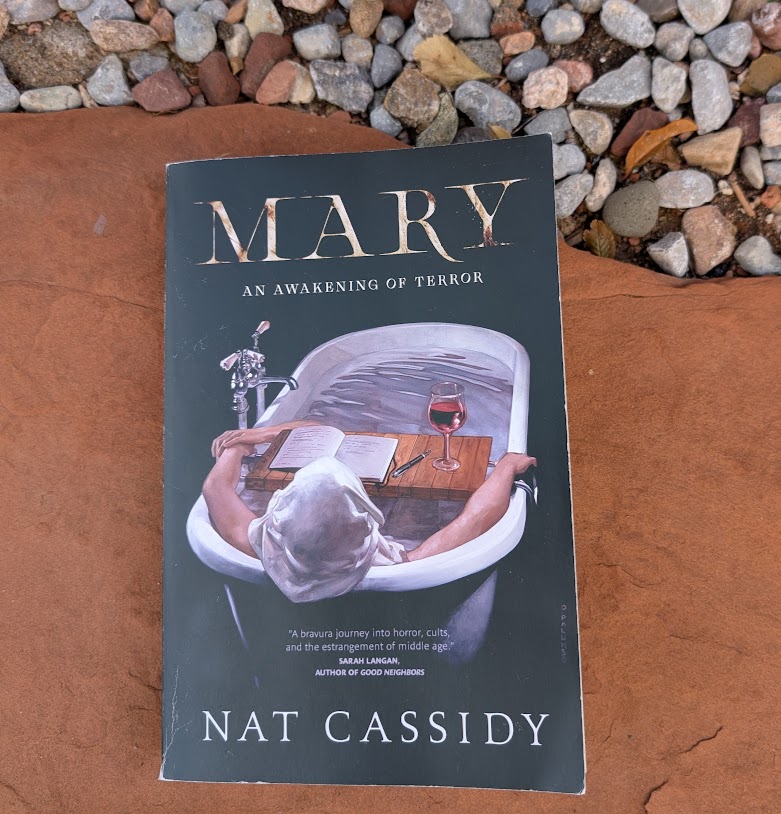
So anyway, on to Mary’s story. In a weird twist of fate, I am almost exactly Mary’s age as I write this. I’m a few months younger (we’re both a few months shy of 50) but way farther than her in the menopause journey. Mary has just begun to feel the joy of hot flashes, poor sleep, brain fog, irregular periods, and irritability that herald the menopause years. All of this really sucks but it’s also very “normal” and Mary’s doctor is zero help. She’s afraid to tell him about her more unusual symptoms–vivid nightmares, fits of blind rage, and really specific hallucinations. Every time she looks at a woman too close to her age, she sees terrifying images of damage and decay. It happens when she looks in the mirror, too, so that’s fun.
This is her daily background noise–lonely apartment, dead-end job, no friends, intense and frequent hot flashes, terrifying hallucinations. Still, it’s her life and she’s doing her best to live it on her own terms. Until her boss lets her go, which means she’ll probably lose her apartment. As Mary is trying to figure out how to get a new job and stay housed, her Aunt Nadine calls from Arizona, begging Mary to come take care of her. Nadine says she’s dying but she’s probably just lonely. Nadine kinda sucks to live with (she sucks a lot to live with) but . . . she’s family, and it’s not like Mary’s got anything else going on just now.
So Mary goes home to Arizona to take care of Aunt Nadine for a while and maybe figure herself out. And the horror begins almost immediately. I’m about to give away one key plot point so spoilers ahead! You’ve been warned! Skip to the next paragraph if you don’t want to know! Okay, here’s the spoiler: one of the main things Mary figures out is that in addition to being herself, a quiet bookish woman, she’s also inhabited by the soul of a local serial killer who used to target middle-aged women. This explains a lot about those face-melting hallucinations, as well as a few other things that started happening when she got back to town.
Okay, spoilers over. Without giving anything else away, it turns out Mary’s hometown has a dark history and is super haunted by terrifying ghosts with bloody clawlike fingers and bloodsoaked pillowcases over their heads. Crazy stuff starts to happen and Mary herself might be responsible for some of it. It’s all horrific and violent and confusing but it also does push Mary to find her own courage and power. Will she once again let life knock her down, surrender to the invisibility that takes so many aging women, or will she rise up and force the world to see her?
This book is full of women struggling to be seen and valued. Some of them try to rebel, some try to be useful to those in power, some try to smile through it all and lean on other women, some are fiercely bitter and independent to the last. The story is relentless in this way; it’s entirely about women and it’s entirely about the ways the world totally fails to recognize and value them no matter what they do. This is a kind of depressing but vital aspect of the book because it makes you empathize with and root for pretty much every single female character even though some of them are actually pretty villainous.
In spite of the dark themes of misogyny, this book is full of dark humor and exciting bloody horror scenes. Mary is personable and funny. Aunt Nadine is awful but also funny (and smart). A lot of the action is brutal and creative and satisfying in the way of classic ‘80’s slasher films. (Just for a taste of the humor, at one point Mary is literally saved from death by a hot flash.) I love it when horror stories can use a sense of campy fun to help us deal with dark and depressing issues, and this book does it well. It’s a fun book that horror fans will really enjoy even if you know zip zero about menopause and care not at all about middle-aged folks and their struggles. It will entertain you while giving you a bit of a new perspective. And if you know menopause intimately and know the struggles of middle-age, you’ll know exactly how Mary feels.
Follow us here or on Substack. As always, embrace the darkness and read more books.
 Darker Books