Black Sun: a Review

Technically Black Sun (by Rebecca Roanhorse) is epic fantasy instead of horror and I actually didn’t pick it up for the blog at all. I was talking to a friend about the upswing in indigenous horror writers and she said she was reading this fantasy series set in the ancient Americas. It sounded cool so I got myself a copy and started reading. (I didn’t do this on purpose, but my copies of all three books are signed by the author because she’s got New Mexico connections. So that’s neat.)

The first chapter features a mother doing some very bloody ritual magic on her son, attempting to turn him into a vessel for the Crow God, and then throwing herself off a cliff as a sacrifice to complete the ritual. 

It was intense. It was dark. I loved it. I read the whole trilogy and now I’m gonna review it for you, one book a week, for the rest of the month.

Black Sun is set in a fantasy world inspired by various Mesoamerican cultures. There’s no one-to-one correspondence, just a fantasy mix of ancient fashions, hairstyles, beliefs and cultures. I found these inspirations refreshing and fun, and I enjoyed the truly polytheistic perspective Roanorse creates in this world. As the series progresses, more gods, through their various avatars, try to work their will in this world. She sets up an epic battle between spiritual forces without any of them being clearly good or evil. This first book was especially successful at that.

The book alternates between Serapio (the Crow God’s intended vessel but also quite a nice young man) and Naranpa, the Sun Priest Serapio is divinely mandated to overthrow. While Serapio sails from the Cuecolan coast toward the holy city of Tova (don’t worry, there’s a map in the front of the book), Naranpa is trying to revitalize the city’s priesthood and battling politics between the city’s four great clans and the poor clanless folks of Coyote’s Maw (don’t worry, there’s a map for this, too). 

As we follow both of them, we’re given tantalizing bits of the events that set both Serapio and Naranpa on their current paths. We learn about the Watchers, the priestly hierarchy Naranpa rules, that were created a few hundred years ago after a great war between several nations and their various gods. We learn that much more recently, a generation ago at most, the Watchers led a raid against the Crow clan. In attempting to stamp out worship of the Crow God with bloody finality, they drove one rebellious Crow to find a way to bring back her god in human form and exact revenge on the Watchers. Serapio, of course, is that vessel, born for revenge. This is mostly local politics but since Tova is officially the spiritual center for several nations, fights between Tovan factions can have much broader ripples.

Serapio knows this. About the Crow Clan and the revenge, I mean. Not about international relations. He was born and raised for revenge on the Sun Priest and educated in war and pain and dedication by his mother’s allies. He embraces his destiny. But he’s also barely an adult and this boat ride to destiny is the first chance he’s ever had to get out of the house and meet people. He becomes friendly with Xiala, the boat captain in charge of delivering him to Tova. She’s a Teek, a sort of Siren or mermaid from a small reclusive island nation. She tells him stories and he keeps her company as she guides the boat through the starlit night. For the first time in his life, Serapio finds a friend and for the first time in a long time, Xiala finds someone who just likes her instead of being fascinated or repelled by her Teek heritage. (There are a lot of superstitions about Teeks. They can speak to the sea and calm its waters so everyone wants one on their boat, but the minute things go wrong guess who they blame?) It’s a beautiful little relationship that deeply affects them both. 

Meanwhile, Naranpa is dodging assassination attempts while trying to revitalize her city’s faith. Naranpa is originally from that poor clanless Coyote’s Maw, while pretty much everyone else in the priesthood are honored members of the four major clans. She’s the Sun Priest, the head of the whole council, supposedly the greatest power in Tova and owed allegiance by most of the surrounding nations as well. Ever since that raid on the Crows, though, the Watchers’ reputation in the city is tarnished and to make things worse, the Clan leaders look down on Naranpa herself for her background. She’s got a tough road ahead if she wants to reform the city. 

I won’t spoil the inevitable confrontation but I will say it’s spectacular. The book takes its time, letting us really get to know our lead characters and several supporting characters, but this battle is always looming ahead of them. What I loved most is that I couldn’t decide who I was rooting for. Serapio is so sad and endearing, Naranpa is so idealistic and embattled. I loved them both but by  the end I also understood there could be no agreement between these two. This made for a moving and complex ending I thoroughly enjoyed. 

New reviews every Friday. Embrace the darkness and read more books!

Alchemized: a Very Long Review for a Very Long Book

I don’t usually do content warnings because I consider them implied in a blog about horror novels and murder mysteries, but this book deserves a content warning. SenLinYu’s Alchemized is awash in body horror, torture, creepy medical experiments on unwilling subjects, and a little bit of sexual assault. These are so integral to the book that I can’t even review it without talking about some of these subjects, so skip this review if you’re not up for this much darkness. 

My second warning is that SenLinYu is apparently famous for writing a Harry Potter fanfic where Hermione Granger and Draco Malfoy get together and Alchemized is an expansion and reworking of that. Once I found that out (around 300 pages in, I think) I couldn’t unsee it. Hermione and Draco are definitely still visible in the main characters and that drew me out of the story at times, but the rest of the story is different enough that it didn’t bother me. If you feel a lot of feelings about the Harry Potter series or its author, it may affect your experience of this novel. 

That said, if you’re still here and game to try it, this is a pretty enthralling read. At over a thousand pages, it’s a brick of a book, but I’m glad the author resisted the temptation to break it up into a series. I loved being able to follow the long sweep of the story from beginning to end without interruption, and SenLinYu did a great job of keeping the story cohesive and moving forward even as it got bigger and more complex. 

Now, the details. 

Fantasy novelists love inventing new magical systems and societies, and this book is no exception. Alchemized is based on, unsurprisingly, alchemy. Historically, alchemy was a blend of art, science, and occult religion, and in Paladia it’s the same. In Paladia, though, a person’s alchemy ability depends on resonance, a sort of natural energetic affinity to various natural substances. If you have a resonance with iron or copper, for instance, you can learn to manipulate it and transmute it into other substances. If your resonance is especially strong, you might be able to affect quite a number of metals and natural elements, including human bodies and souls.

Paladia is the worlds’ main source of Lumithium, an element that amplifies resonance in humans and can enhance alchemical effects, and the key to scaling up alchemical processes to industrial levels. Paladia was founded and is still ruled by the Holdfast family; they’re both political and religious rulers, and they also run an elite alchemy school to train the best and brightest students with the strongest resonance, and to further the study of alchemy. The Holdfasts are in constant tension with various Guild families, mostly talented alchemists of various metals who perfected ways to industrialize the process and grow rich. 

When we enter the story, however, everything has gone horribly wrong and the whole country is now ruled by the horrifyingly immortal High Necromancer and his terrifyingly ruthless right hand man, Kaine Ferron. The Necromancer rules through a combination of cruelty to everyone and the promise of immortality to his faithful followers–only he has the alchemical secret to becoming Undying, and once you accept his “gift” you’re bound to the Necromancer forever. Everyone in this new reality is either miserably oppressed or trying desperately to impress the High Necromancer, mostly to avoid being miserably oppressed. Our hero, Helena, is the last living member of the Resistance. Newly discovered in a forgotten prison tank and missing a good chunk of her memories, it’s Ferron’s job to extract whatever secrets are hidden in that brain of hers. The Necromancer’s minions lock Helena’s wrists into manacles lined with “nullium” that deaden her natural resonance, then she’s packed up and sent to Ferron’s country estate for interrogation. Ferron one of those powerful alchemists who can manipulate all sorts of materials. He’s also a vivimancer, meaning he can manipulate people’s bodies and brains, so Helena’s interrogation less torture and questioning, more direct attempts to magically invade Helena’s brain and unlock the information the Necromancer wants.

The entire story is told through Helena’s eyes, first as she tries to figure out what the hell happened to her and what Ferron’s deal is, and later as her memories come rushing back and we see the war’s last year through her eyes. In part one, we see Helena fierce and almost pathologically self-sacrificing, still willing to do anything to protect a Resistance that no longer exists. She’s repelled by Kaine and his cold vicious ways, but also confused. As far as she can tell he’s a remorseless killer, always seething with barely suppressed rage and totally devoted to the High Necromancer’s every whim. But he’s also got some weird moral code; he seems almost protective of his prisoner’s welfare and he carefully holds himself apart from the casual sadism of his fellow Undying. He’s definitely a monster but not the kind of monster Helena expected. She also suspects he knows her, but whatever their history is, it’s clearly in the locked part of her brain.

The brain unlocking is proceeding pretty slowly when the Necromancer suddenly decides Helena should be part of a program to breed new baby necromancers. One of the few things Helena does remember from the war is being sterilized so she couldn’t pass on her own talent for vivimancy, so she’s pretty shocked to find herself part of a breeding program. One of the Necromancer’s creepy doctors have fixes for everything, it seems, and sure enough she’s “fixed” Helena’s fertility. Yikes.

Unlike the resistance, the Necromancer actually wants vivimancers to breed, and he decides Ferron would be the perfect match for this experiment. Ferron seems utterly horrified (but not totally surprised) by such an order but he has little choice but to make a baby with his prisoner. If he doesn’t do it, the Necromancer’s next choice will probably be worse and Ferron will completely lose control of Helena. This new project is awkward and horrible for them both, and Ferron’s handling of it furthers our suspicion that he’s got more going on than just blind devotion to his leader. 

As Helena’s pregnancy takes root, Helena’s stress levels spiral out of control and, ironically, all this stress loosens the locks on those hidden memories and causes them to come flooding back. Part two takes us back into these memories, and one of the first things we find is that Kaine Ferron was actually spying for the Resistance before they fell. That’s how he knows Helena. 

The war between the Resistance and the Undying had been going on for a few years before Ferron offered his help, claiming he wanted to avenge his mother’s death at the Necromancer’s hands. Exactly zero people believed this (even though it’s completely true) so he randomly asked for Helena to be his contact, implying some vague romantic obsession with her. This, the Resistance believed. A couple of Resistance leaders, Jan Crowther and Ilva Holdfast, essentially tell Helena to seduce him and encourage his obsession so Ferron will be pliable. 

Let’s just say none of this turns out the way any of them planned, and over the course of their alliance the two form a complicated relationship that eventually becomes a fierce love. They both become a bit obsessed with each other and we learn two important things. First, Kaine Ferron is much more a victim of torture and blackmail than anything else, which gives me great sympathy for him and the impossible choices he has to make. Second, the Resistance is a giant bag of dicks. Many of them are either intolerable snobs or self-righteous religious zealots, and almost none of them give the tiniest shit about Helena or what happens to her. She’s both a foreigner and a vivimancer so nearly everyone in the Resistance considers her vaguely distasteful and suspect, but all of them are happy to use her for healing their soldiers and seducing Ferron and literally anything else they need without giving her an ounce of sympathy or credit. Don’t get me wrong, the Undying are way worse than the Resistance, but the Resistance also sucks. They’re convinced with a literally religious fervor that they’re locked in an epic battle of good versus evil, and if only they have enough faith and optimism there’s no way they can lose. As the story progresses, even Helena begins to understand just how far their heads are up their self-righteous asses. It adds a lot of moral nuance to the story when you realize the only person to ever actually hurt the Necromancer is Kaine; even though he’s only doing it for personal vengeance, he’s the secret hero of the war.

Okay, no more spoilers. This review is long enough already. The romance between Draco and Hermione Kaine and Helena gets a little repetitive and overwrought at times; as the war drags on for months in a stalemate, so does their tortured path to love. Eventually the action picks up again, though, and the story does a pretty decent job of balancing their intensely personal drama with the epic events unfolding around them. Helena remains almost obnoxiously self-sacrificing, but also clever and brave and often pretty interesting. Kaine remains morally complex in a way that I really enjoyed–he becomes more and more a sympathetic character as he tirelessly works to bring down the High Necromancer without being suspected, but never entirely stops being a villain. I love complicated characters like that, and I thought Kaine was well done. 

This is a very long and very dark book that I devoured as fast as I could. It was tense and compelling, pulling me along nearly the whole time, and it balanced the intense relationship with some great world-building and political drama. I highly recommend it.

New reviews every Friday. Embrace the darkness and read more books!

Strange Pictures

I got Strange Pictures in Tucson, at Antigone Books. It’s mostly a feminist/social justice bookstore, which means its horror section is tiny (even tinier than it is in most bookstores) but also very dedicated to minority authors, which made for interesting browsing.

Anyway, I picked up Strange Pictures by Uketsu mostly because the author’s name was Japanese. My family lived in Japan when I was in high school and even though I don’t speak the language, I’ve read a lot of Japanese novels in translation. Mostly literary stuff but also authors like Yoko Ogawa and Ryu Murakami who write horror and speculative fiction. 

Since I don’t speak Japanese, I didn’t realize Uketsu’s mysteries were famous on YouTube until after I bought the book. The cover calls him a “mystery-horror sensation” and he may do horror tales on his channel but Strange Pictures is pretty much straight mysteries. There are several shortish mysteries, each one with its own solution, and they all nest together to solve a larger mystery.

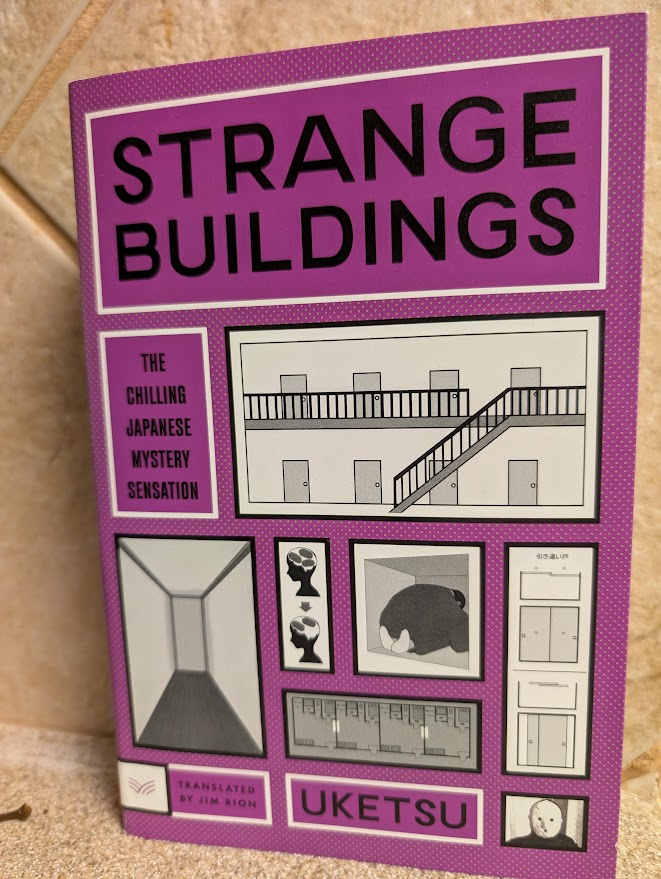
This book was a quick read and very focused on logical puzzles and following clues. It had a very well done “Sherlock Holmes” vibe, where clues are clearly laid out and everything fits neatly together by the end. There’s not much exploration into psychology or deep emotions but the characters are pleasant and usually relatable. There are definitely some dramatic moments and a few surprises. Also, the “strange pictures” of the title are actually pictures that are printed in the book so you can try to solve the puzzles yourself if you want. 

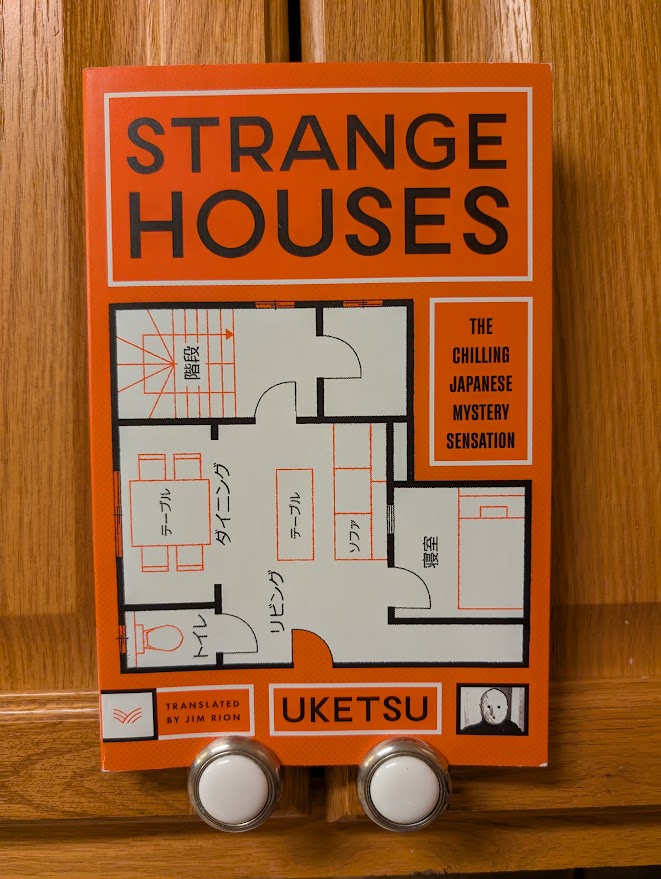
On the one hand, this book has almost none of the weirdness and complexity that I look for in a darker book so it’s not gonna stick with me the way my favorites do. On the other hand, it’s so logical and neatly resolved that I was quite charmed and satisfied with the experience of reading it. I fully plan to find the sequel, Strange Houses, at some point. There are still several murders in this book so it might sound odd to say, but I think of this as light reading. 

Embrace the darkness and read more books. As always, follow us here or on Substack.

This is My Body

Let’s talk about This is my Body by Lindsay King-Miller. More specifically, let’s talk about how much I loved it because man, this book got to me. It’s got a possessed kid who levitates and eats the local birds and squirrels, but that’s not what haunts me. What haunts me is how relatable all the religious guilt and family dysfunction is.

Books about generational trauma seem all the rage right now and most of them don’t really do it for me. The trauma is so big and abstract, it’s hard to really connect to it on a personal level. This book, though, is a look at that trauma up close. Ridiculous amounts of repressed guilt and anxiety. Imprenetrable emotional armor and narcissism. Everybody blaming everyone else for their pain and everybody being at least a little bit at fault. If you pull back far enough you can see the epically oppressive institutions pouring pain down through the generations, but on the daily human level it usually doesn’t feel sweeping. It feels like a big painful mess that no one quite knows how to deal with. 

So. Back to the possessed kid. Or actually, we should start with the possessed kid’s mom, Brigid. Brigid has so much Catholic guilt. Like, as much Catholic guilt as you can fit into one person. When she was little, she and her mom (her single mom who was never married to her dad) had to move in with Uncle Angus, a domineering priest who always kept the curtains closed and wouldn’t let her watch TV or read books that weren’t the Bible. This already sucked, but when Brigid fell in love in middle school, Angus got even worse. Mostly (entirely) because Brigid’s crush was her best friend, Alexandra. I’m pretty sure a straight crush would have still bothered Angus but this gay crush was soooooo much worse. Angus rained down the wrath of his god and Brigid’s mom was pretty much on his side. It was bad.

Eventually Brigid grew up, officially came out of the closet, opened an occult bookstore, and cut Angus and her mom completely out of her life. If only she could cut the secret guilt and shame out that easily. Still, she’s tried hard to keep all that from her daughter, Dylan. Dylan’s gonna grow up pampered and protected and connected to a mother who really sees and understands her. History will not repeat itself, dammit! (Honestly, this is what most of us strive for with our kids. Sad thing is, when we don’t repeat our parents’ mistakes we usually make new and different mistakes instead.)

And then Dylan gets possessed. At first we’re not sure that’s what’s happening. Dylan’s a middle schooler and they can act pretty weird, especially when they’re going through some stuff. Dylan’s fighting with her former best friend, Kai, and when she punches him and then later actually bites him she gets in big trouble with the school. Dylan doesn’t want to talk about it and Brigid is freaking out, wondering where she went wrong as a mother. And on top of all this drama, Brigid is trying to reconnect with that old school crush of hers, Alexandra, who’s even more awesome as an adult than she was in middle school. Connecting with Alexandra (Zandy for short) is good but the timing really sucks.

Especially when, right before their first date, Brigid discovers all the dead animals in Dylan’s closet. A few pages later we’ve all decided Dylan is definitely possessed. It’s bloody and there’s levitation involved. The only person Brigid knows who’s ever exorcised someone is her shitty Uncle Angus. In the absence of better ideas, she heads to his house in Denver to beg for his help. 

This turns out to be a terrible idea. He’s just as awful as she remembers, only now he’s being all fake nice to Dylan, who is totally falling for it because she’s so delighted to suddenly have a grandpa. Brigid never told her why she didn’t talk to her family. Then Zandy calls; she googled Angus and found out he was actually defrocked in the 1980s for running a cable access show where he “exorcised” people on screen. Was the exorcism Brigid witnessed fake? But she saw it with her own eyes!

And things get even worse when Brigid finds an old journal her mother made before her suicide. It’s full of clear evidence that her mother never forgave her for being gay, but also full of news clippings of people who committed heinous crimes after being on Angus’s exorcism show. 

It’s all just crazy and Brigid has no idea what to do now. If Angus can’t actually exorcise her daughter, who even can? She has to save her daughter somehow but Brigid almost feels possessed herself, filled with panic and shame and a growing desire to just smash Angus’s face in. 

I’m not gonna tell you how it all ends. I’ll just say it gets worse and weirder before it gets better. This is a quick read full of drama and horror and I loved following all the mysterious little threads weaving together as the book progressed.

What I loved most, though, was how real and complex all the relationships felt. Angus is a hateable villain but we also get glimpses of where it all comes from. Brigid’s mom is incredibly frustrating and grossly unfair to her daughter but we also get glimpses into her own personal torture. She feels all too familiar to those of us who grew up in conservative religious families. Brigid and Dylan are sympathetic and relatable, while also being flawed and human.

I didn’t grow up Catholic but my background is close enough that this book was all sorts of familiar. I grew up during the Satanic Panic, around people who tried to “pray the gay away” and wouldn’t watch R-rated movies because they’d “drive the spirit away.” This book captures the spiderweb of complex emotions and relationships that culture tends to weave around you, while also being an exciting horror novel. If you like possession stories (which I do) and/or carry residual religious guilt (which I do) go read this book. Go read it right now.

Embrace the darkness and read more books. As always, follow us here or on Substack.

Mary: an Awakening of Terror

Let’s talk about Mary: an Awakening of Terror, by Nat Cassidy. This book, about a middle-aged woman going through perimenopause, is written by a man. A straight cisgender man, even. Nat is aware this might be weird, and he talks about it before we even start the story (and again at the end). I can’t say that as a man he perfectly captures the experience of middle-aged women. He only partially captures the weirdness of menopause and the female midlife crisis (both of which I have some experience with). But it’s a good effort and I enjoyed this book a lot. Unless you love romance, you’re not gonna see middle-aged women featured much in books and movies. They’ll get supporting roles but the stories are rarely about them. This story, and I give it a lot of credit for this, is definitely about Mary and a slew of other women her age. It’s wholly centered and focused on their feelings and experiences and it works to represent them in real and individual ways.

So anyway, on to Mary’s story. In a weird twist of fate, I am almost exactly Mary’s age as I write this. I’m a few months younger (we’re both a few months shy of 50) but way farther than her in the menopause journey. Mary has just begun to feel the joy of hot flashes, poor sleep, brain fog, irregular periods, and irritability that herald the menopause years. All of this really sucks but it’s also very “normal” and Mary’s doctor is zero help. She’s afraid to tell him about her more unusual symptoms–vivid nightmares, fits of blind rage, and really specific hallucinations. Every time she looks at a woman too close to her age, she sees terrifying images of damage and decay. It happens when she looks in the mirror, too, so that’s fun. 

This is her daily background noise–lonely apartment, dead-end job, no friends, intense and frequent hot flashes, terrifying hallucinations. Still, it’s her life and she’s doing her best to live it on her own terms. Until her boss lets her go, which means she’ll probably lose her apartment. As Mary is trying to figure out how to get a new job and stay housed, her Aunt Nadine calls from Arizona, begging Mary to come take care of her. Nadine says she’s dying but she’s probably just lonely. Nadine kinda sucks to live with (she sucks a lot to live with) but . . . she’s family, and it’s not like Mary’s got anything else going on just now. 

So Mary goes home to Arizona to take care of Aunt Nadine for a while and maybe figure herself out. And the horror begins almost immediately. I’m about to give away one key plot point so spoilers ahead! You’ve been warned! Skip to the next paragraph if you don’t want to know! Okay, here’s the spoiler: one of the main things Mary figures out is that in addition to being herself, a quiet bookish woman, she’s also inhabited by the soul of a local serial killer who used to target middle-aged women. This explains a lot about those face-melting hallucinations, as well as a few other things that started happening when she got back to town.

Okay, spoilers over. Without giving anything else away, it turns out Mary’s hometown has a dark history and is super haunted by terrifying ghosts with bloody clawlike fingers and bloodsoaked pillowcases over their heads. Crazy stuff starts to happen and Mary herself might be responsible for some of it. It’s all horrific and violent and confusing but it also does push Mary to find her own courage and power. Will she once again let life knock her down, surrender to the invisibility that takes so many aging women, or will she rise up and force the world to see her? 

This book is full of women struggling to be seen and valued. Some of them try to rebel, some try to be useful to those in power, some try to smile through it all and lean on other women, some are fiercely bitter and independent to the last. The story is relentless in this way; it’s entirely about women and it’s entirely about the ways the world totally fails to recognize and value them no matter what they do. This is a kind of depressing but vital aspect of the book because it makes you empathize with and root for pretty much every single female character even though some of them are actually pretty villainous. 

In spite of the dark themes of misogyny, this book is full of dark humor and exciting bloody horror scenes. Mary is personable and funny. Aunt Nadine is awful but also funny (and smart). A lot of the action is brutal and creative and satisfying in the way of classic ‘80’s slasher films. (Just for a taste of the humor, at one point Mary is literally saved from death by a hot flash.) I love it when horror stories can use a sense of campy fun to help us deal with dark and depressing issues, and this book does it well. It’s a fun book that horror fans will really enjoy even if you know zip zero about menopause and care not at all about middle-aged folks and their struggles. It will entertain you while giving you a bit of a new perspective. And if you know menopause intimately and know the struggles of middle-age, you’ll know exactly how Mary feels. 

Follow us here or on Substack. As always, embrace the darkness and read more books.

This Wretched Valley

This is a Trex book review for This Wretched Valley by Jenny Kiefer.

I genuinely don’t remember where I saw this book first. I think it was in the free magazine from my public library. Anyway, it was on my to-read list for a while since I have a fondness for books where nature is trying to kill everyone. Fiction or non-fiction, I love a book where man’s hubris is checked utterly by nature. The book opens with the remains of four bodies and an abandoned Jeep being found on the side of the highway in rural Kentucky. From there we go back to who those four people used to be and how they ended up as a confusing set of remains.

Clay is a graduate student in geology at the University of Kentucky completing his dissertation using LIDAR technology to map rock formations. He finds what he believes to be an uncharted rock wall in Kentucky. With hopes to finish his dissertation and also turn this discovery into a career mapping climbing locations professionally, he plans a field excursion out to the wall. He brings in a fellow graduate student in his program, Sylvia, to help him research the location. Her research is in the relationship between native plants and geology. Clay also recruits his rock-climbing friend, Dylan, who recently received a sponsorship and is excited to be the first person to set climbing routes on this virgin rock wall. Dylan’s boyfriend, Luke, and his dog, Slade, come to belay for Dylan. On their way to the site, they stop at a diner for a last meal of sorts. The waitress tell them that the patch of forest they’re headed for is dangerous. People who go in don’t come out the same if at all. Obviously, they go anyway. From the get-go, things start to go wrong. Slade is scared and acting oddly, every plant Sylvia sees is poisonous, there is no sign of the huge rock formation they’re heading for, and the gps is misbehaving. Obviously, they push forward. 

Eventually, they reach the lip of a valley and see the giant rock. It’s everything Clay and Dylan hoped for. Slade has to be dragged into the valley. The rock has a magnetism to it, especially for Dylan. Drawn by the rock, Dylan wakes up before everyone else the next morning and starts to free climb. In her haste, she leaves the tent unzipped and Slade escapes. When Luke wakes, he’s beside himself. It’s unlike Slade to stray but he’s nowhere to be found. After an hour of looking, Dylan convinces Luke to quit. Now Luke is filled with resentment at her seemingly callous attitude toward their dog, ingratitude at the sacrifices he made to be there, and general disregard of his emotional state. Dylan is a woman possessed by this rock and her dreams of making it big as a climbing celebrity. Clay is somewhat inexplicably bumbling and brooding. Sylvia, at this point, seems to be the only person who is acting pretty normal and is doing responsible research and documentation. Slade remains missing. Dylan is mapping yet another climbing route and is high on the wall when disaster strikes. She falls and multiple of her clips fail. Dylan’s weight pulls Luke off the ground and the rope swings her like a pendulum into his body. Luke’s head smashes against the wall. She cuts them both down and it’s immediately apparent that Luke needs medical attention at a hospital. He is concussed and has seriously injured both an ankle and a wrist. This is when things really start to spiral for the group. 

From here, the book takes a slightly different course than I expected. From the first pages, it’s clear to the reader that the physical location is wrong or evil or…something. What was surprising was that in addition to the supernaturally evil locale, there are evil ghosts. So this is a place possessed. The ghost character and backgrounds for them are really interesting additions to the story. The interactions between our main characters and these ghosts are creepy and mind-bending. I wondered though if there were too many different eras of ghost. Clearly the idea is that the place is evil and hungry, corrupting and capturing the souls of those who dare enter. There is ultimately no explanation for why. I get it, it’s supposed to be like an eldritch evil that defies explanations of men but I still wanted more. Similarly, some ghosts were more evil and in charge than others but didn’t really have much more background. Why did the oldest ghost seem to date back to the civil war? That doesn’t seem long enough unless the civil war itself was a catalyst somehow. Another thing that bothered me some was how the ghosts and the land seemed to be sharing the corpses. It was an interesting idea that they were both feeding off the fear and death but the different mechanisms left something to be desired. Like why did Sylvia get turned into a skeleton but Clay was left largely intact? I appreciated the variety but felt there was just a tiny bit more explanation or exploration needed. Anyway, this is mostly me poking holes in an otherwise perfectly good and satisfying horror novel. There is plenty of gore, suspense, disgust, betrayal, and visceral sensory detail here to give you at least mild nightmares. 

What Stalks the Deep

What Stalks the Deep is the third in T. Kingfisher’s “sworn soldier” series featuring Alex Easton. I highly recommend all three and they do relate to each other, but each of Alex’s adventures is complete in itself, so you don’t absolutely have to read the first two to enjoy this one. All you need to know going in is that Alex has been invited to America to help a friend, Doctor Denton, who was instrumental in defeating the mysterious evil Alex encountered in the first book. The way the invitation is worded, Alex is pretty sure Denton has encountered some new mysterious evil and Alex is not one to abandon a friend or shy away from battle. So off to America it is!

If you haven’t read any of these, “sworn soldier” is pretty much its own gender identity in Alex’s home country of Gallacia. Alex was born female but took on this new identity and pronouns (ka and kan) when ka became a career soldier. In Europe, this is generally accepted as “one of those quirky Gallacian things” and people are curious but not alarmed about it. Fellow soldiers tend to recognize one of their own breed in Alex. Americans, of course, know jack-all about this tiny European country so mostly Alex just poses as a man instead of trying to explain Gallacian language and culture. None of this is vital to any of the stories, I just find the whole thing (and Alex’s wry comments on Gallacia) interesting and amusing. I also think it’s a cool way to present the unique life experience and bond soldiers often have. Gender aside, it is its own thing, you know?

The real meat of this story is that Denton’s cousin has disappeared while exploring an abandoned mine his family owns, and there’s reason to think strange things are afoot. Finding out requires exploring the mine itself, and in the process Alex has to constantly remind themself (kanself? Kaself? I don’t speak Gallacian) that ka is a badass soldier who is absolutely not claustrophobic or scared of being deep underground. Nope. Nosiree, Alex isn’t scared one little bit and ka’ll die before ka’ll say otherwise. I love Alex. 

As they explore the mine and nearby town, the friends do indeed find something mysterious and maybe evil. I don’t want to give anything away, but the “sworn soldier” series (and a lot of Kingfisher’s weird tales) generally lives in that muddy area between natural and supernatural and this book definitely lives in that area. Kingfisher takes a lot of inspiration from classic authors of weird tales, like Edgar Allan Poe and Arthur Machen, and this particular one draws inspiration from Lovecraft and his stories of ancient gods and buried mysteries. I enjoyed, as I usually do, the updated and creative spin she put on the classic theme. 

I haven’t reviewed a Kingfisher book for you yet so you couldn’t possibly know this, but I love her work. I can always count on her for engaging characters and solid storytelling, and though she leans more toward haunting and fairytales than gore, she’s great at creating a spooky atmosphere and has a real knack for creative and disturbing imagery. I haven’t read a book of hers yet that I didn’t enjoy, and I find Alex Easton’s adventures especially delightful. Plus the cover art is awesome. I listened to the first two books on audio* but someday I’ll have to go buy physical copies because the artwork is just that good. 

*I don’t listen to a lot of audiobooks but I recommend these if you’re into that sort of thing. All the books are written in first person as if Alex is telling us the story, and Avi Roque does a great job conveying Alex’s sense of humor and soldierly stoicism while preserving ka’s unique identity. 

Until next time . . . as always, embrace the darkness and read more books.

Blindness: a Review

A couple years ago I had this idea to read a whole bunch of books by Nobel Prize for Literature winners. I chose a couple from each decade the prize has been awarded and I actually got through the first three or four authors on my list before my life exploded a bit for entirely unrelated reasons. By the time everything calmed down enough for me to focus on hobbies and projects again, I’d cooled on the Nobel project and eventually I started this one instead. 

Still, I haven’t entirely forgotten the Nobel thing and when I noticed Jose Saramago’s Blindness on the horror shelves at Antigone Books, I decided to put it on my pile. It seemed like a nice intersection between my old project and my new one. 

It was a nice thought. Too bad I didn’t enjoy this book at all. It is dark, though, so I’m determined to review it. 

I should mention the writing style first. Saramago has a very distinctive style of run-on sentences and walls of text. He doesn’t separate speakers so when he writes conversation it can take a second to figure out who’s saying what. He also barely uses any punctuation to show speakers’ inflection, so an extreme cry of pain would read the same way as a sigh of love or directions to the bathroom. I didn’t have trouble understanding the story but it faded quickly into a drab monotone that I hated quite a lot. People swear up and down that the run-on sentences sound great in Portuguese and I even read that it’s not an uncommon style choice in Portuguese and Brazilian writing. I can actually buy this. Some style choices just don’t translate well, so I can buy that the flat monotone of the English text is actually melodious and flowing in the original. Even though it didn’t work for me, it’s definitely unique.

Okay, moving on. The book’s plot is essentially that everyone in the city is going blind, one after the other, for no discernable reason. We, as readers, are following several of the first to be afflicted as they’re shunted off to quarantine (along with one blind man’s wife who pretends to be blind so she can stay with her husband). None of the characters have names because, and this is stated early on, now that they’re blind they have no use for names. They’re all called things like “the first blind man” and “the woman with dark glasses” and “the doctor’s wife.” This is both kind of annoying and probably deeply thematic.

Anyway, this blindness is both mysterious and extremely contagious so no one wants to actually enter the quarantine building to clean or deliver food or help these newly blind people learn to get around, so they mostly stumble around in confusion and shit on the floor. A lot. Both these aspects are described at length throughout the book. Symbolism!  The sighted wife is very worried about what will happen if she’s found out (Will she be taken away from her husband? Will she become a slave to the needs of her blind bunkmates?) so most of the time she doesn’t try to help make any of this better for anyone. Some of this is thematic and some of this is, I think, Saramago being very old and sexist. (We’ll get back to this in a minute.)

As the quarantine building becomes overcrowded and order breaks down both in the building and the surrounding city, a faction of criminals hijacks the food supply and demands everyone’s valuables in exchange for food. When the valuables run out, they demand sex from the women of each unit in return. The non-criminal men kind of protest but let the women bravely volunteer to be raped for the good of everyone. The night before their rape appointment with the criminal faction (the criminals pick a different dorm room each night to send them women), the women generously have sex with a bunch of their male bunkmates. The sighted wife totally watches her husband have sex with another woman and is . . . super compassionate and pleased that he’s happy. 

Then Saramago describes pretty explicitly the gang rape of a couple of different sets of women, the subsequent murder of the criminal faction’s leader, and the burning down of the quarantine building. At this point, the quarantined prisoners realize all the guards have either fled or become blind and they’re free to leave. Our main characters wander the city looking for food and checking on their former homes, being cared for by the sighted wife. Various symbolic things happen, including more shit everywhere and a lot of beautiful cleansing rain. Some of the symbolism feels a bit ham-handed, if you ask me. Then, at the very end, people begin to spontaneously regain their sight. Their recovery is exactly as sudden and mysterious as their blindness. The end.

But back to Saramago’s sexism, partly because it feels like a lot and partly because it’s a symptom of the larger way the book failed for me. Saramago was born in 1922 and even though he didn’t write Blindness until 1995 (and he was famously very communist and atheist and enlightened and whatnot) he writes with a creepy old-timey view of women. The sighted wife is unfailingly selfless and not interested in leading these people in any overt way. So is the “girl with the dark glasses” who, in spite of being blind, every man there can tell is the hot one. Saramago also never lets us forget “girl with the dark glasses” was also very slutty before she went blind. It doesn’t seem to matter, he just wants us to know. Later in the book, her sluttiness is redeemed (I guess) because in addition to taking a motherless boy under her wing, she falls in love with an old man who feels like he might be a creepy stand-in for an aging Saramago himself. Women are used heavily as symbols of hope and redemption and compassion in this book, but none of them feel like real human people. For me, it deeply undermined Saramago’s themes. How can I agree “sometimes people act this way” and feel moved by Saramago’s message when some of his pivotal moments feel like Saramago’s weird fantasy? Also, of course the women are redeemed by pure motherly selflessness. I guess even atheist communists have trouble leaving the Madonna/Whore binary behind.

The whole allegory seems to be about how fragile society is and how easily it breaks down into violence and selfishness. I don’t really disagree with this point but if I did this book would totally fail to convince me, mostly because I didn’t feel any complexity here. Only a couple weeks after reading Blindness I read a book about the New Mexico State Prison riot, and I couldn’t help but see deep parallels with what Saramago was trying to represent. In some ways, the prison riot is exactly the kind of sudden madness and breakdown of morality Saramago is writing about. But the actual prison riot was full of the kind of complex behavior even the worst human disasters are always full of–people murdering fellow inmates, police standing by and letting it happen, inmates trying to help friends, people trying to escape, inmates sneaking a friendly guard out the front door. Saramago’s story was simplified, of course, but to me it felt so simple the characters didn’t feel real or human anymore and I couldn’t identify with anything. 

If I were very young and new to stories exposing the “evil within us,” as I always think of it, I might have been more moved and impressed with this book. I was assigned a dozen similar books over my years at school, though, and have read many since then. If I had to rate them all, this would be pretty low on my list. 

Embrace the darkness. Read more books.

Silent Girls

Eric Rickstad’s The Silent Girls is the first in a trilogy, apparently. If I hadn’t figured that out already, the major cliffhanger at the end would have tipped me off. Thing is, by the time the cliffhanger happened I was a wee bit tired of this book so I’m not sure when or if I’ll find out the end of that new mystery.

This is one of those super gritty mysteries that keeps you guessing because everyone in it is definitely awful enough to murder someone. Even our hero, honestly. His defining features are his tragic backstory and the fact that he drives drunk a lot. Enough that I expected it to become a plot point somehow, with him swerving all over the snowy winter roads while fully loaded, but it turns out that drunk as Frank is in this book, it doesn’t affect much of anything.

But anyway, back to the tragic backstory. Once upon a time Frank was on the police force of his small Vermont town, probably with a good career ahead of him. Then his sister and her husband were brutally murdered, leaving a miraculously unhurt (but now orphaned) baby daughter. Frank quit the force and became a private detective, partly so he could focus on raising his niece and partly because of his guilt over the whole situation. When the killer arrived, Frank’s sister was at the house waiting for him to show up; he was late for the millionth time because he was busy having meaningless casual sex with some gal. To be clear, no one was expecting this killer to show up. Frank wasn’t neglecting his duty or intending to put anyone in danger, he was just being normal amounts of douchy and self-involved. Still, he feels incredibly guilty about it and now that his niece is off at college and the horrible killer is about to be paroled, it’s been on Frank’s mind more than usual. 

None of that is the mystery. It’s very much going on in the background and it’s very important to Frank but the actual mystery is mostly unrelated–a local teen has gone missing and the cops are starting to worry that the disappearance is related to a handful of others over the last few years. This is a mystery novel so of course they’re connected, but the missing girls are from widely different areas and seem to have nothing in common. Frank and the town’s two detectives, Harland Grout and Sonja Test, have a devil of a time connecting the girls and figuring out who might want them dead. 

I don’t want to give too much away but I will say this mystery deals heavily with teen pregnancy and the abortion debate. It doesn’t try to take a definitive stand, which I appreciate, it just touches on various sides of the issue as the mystery is unraveled. I enjoyed the complexity there and the mystery was kind of farfetched (as most mysteries are) but it was interesting and had some dramatic moments and exciting twists. It was exciting to watch these detectives connect the dots, and the mystery was unraveled slowly in a way I enjoyed.

None of the characters quite held together for me, though. Rickstad was quite descriptive and gave us plenty of hooks into their psyches but none of it felt quite coherent. Sometimes it felt like jumping from scene to scene without quite enough to connect them. Each scene might be dramatic and emotionally fraught, but they don’t quite build up into the compelling whole I was hoping for. This is especially true of Grout and Test–we’re given all these tantalizing little peeks into their personal lives but none of it really goes anywhere. Sonja Test, for example, has become a fanatical distance runner and it’s heavily implied there’s a backstory to this new compulsion. I was intrigued by this and hoping we’d find out what’s going on with her but we never do. These dropped threads were disappointing.

Sometimes I browse through reviews after I finish a book and I noticed someone complaining about editing. They were pointing out small annoyances like a person with makeup running down her face in one paragraph and then further down the page described as not wearing any makeup. I’d noticed some little things like that, too, and it got me thinking that lack of editing could explain most of my issues with this book. Take the same characters and mystery but tighten up a few places, expand others, have the detectives interact with each other more (they often seem to run on parallel tracks even though they’re on the same case) and the whole book might have felt more real and compelling. 

It does seem like this was Rickstad’s first novel so it’s possible these rough edges are smoothed out in the sequels. And that cliffhanger is quite a doozy, relating heavily to that tragic backstory I talked about, so I might have to give the second book a shot sometime. Eventually.

Embrace the darkness. Read more books.

Ring Shout Review

This is a Trex review for Djeli Clark’s Ring Shout.

Although nonfiction about the Klan is full of horror enough, this book takes the existence of the real Klan and layers on the supernatural. What if some klansmen were literal monsters? Inhuman creatures with supernatural strength disguised as humans? Ring Shout tells the story of Maryse Boudreaux and her two deadly compatriots as they hunt and grapple with white-hooded monsters in 1915 Macon. They are watched over and aided by Nana Jean whose magic called them to her to fight evil. She brews magical water by channeling the energy of spiritual “shouts” through herself. Maryse wields an otherworldly sword that was forged by slaver chiefs who channeled their regret and anguish into its’ smoky blade. She is the champion chosen by three spirit “aunties” who Nana Jean doesn’t trust and calls “haints.” There is a new and powerful entity in Macon who has pushed into Maryse’s dreams – Butcher Clyde. His plan is to use the film “The Birth of a Nation” to create a portal for an even more powerful and destructive entity than himself to enter the world. There are a lot of supernatural and frankly freaky as hell things in this book. The author does some truly terrifying things with mouths and teeth. The pacing and action feel more fantasy but the body-horror and supernatural entities make this a decidedly creepy (in the best possible way) book. 

As compelling and surprising as the supernatural elements are, just as rewarding were the historical and cultural details. Nana Jean is a Gullah woman and speaks in Gullah on the page. The history and significance of shouts is explained and revered as one of the key factors of the magic in the book. One of Maryse’s friends, Chef, was a Harlem Hellfighter in the war. Disguised as a man, she fought. Now she kills monsters with homemade bombs charged with Nana Jean’s blessed water. One setting of the book is a jook joint owned by Maryse’s love interest. It’s hard not to imagine a more formalized version of the jook from Sinners and this one also gets beset by monsters so I feel fine drawing that comparison and using the movie set in my imagination. On her journey to defeat Butcher Clyde and what hell he is trying to bring forth, Maryse seeks out The Night Doctors. They are terrifying beings based on the historical atrocities committed against enslaved peoples in the name of medicine. It’s not every day that a book teaches me so many things and does so while weaving it all together seamlessly.

Ring Shout is a skillfully written book. It’s entertaining and thought provoking at the same time. While transporting you to a different historical time and place, it also imagines a world where the oppressed have magical tools at their disposal to combat injustice. Not everyone, but some. But so does the enemy. In fact, one of the inciting incidents for everything going on in the book is the release of The Birth of a Nation. In actual history, that movie triggered a resurgence of the Klan. This is also so in the book but some of those human Klansmen also become monsters because of the racist, hateful power of the film. At the climax, Maryse must decide whether she wants to take that power for herself and avenge her people or reject Butcher Clyde’s proposal. Would the end justify the means? Would vengeance make anything better?

Ring Shout got national acclaim and it was well deserved. If you haven’t read it yet, change that. It’s short, action packed, compelling, and even though there were some spoilers in this review, the journey is more important than the destination with this one. Just because you know where it’s going doesn’t mean you won’t enjoy how it gets there.