American Afterlives: a Review

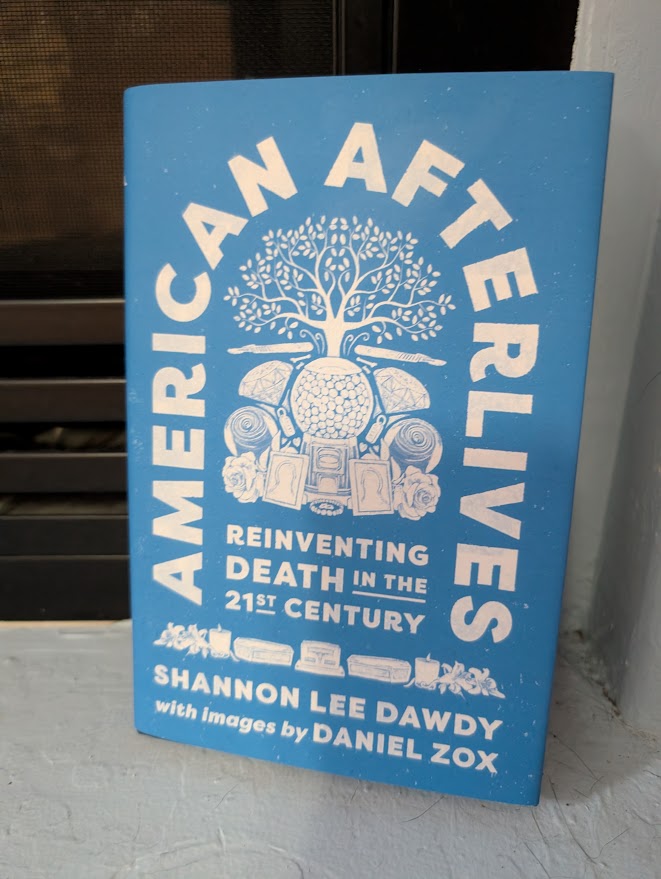
What’s the book? American Afterlives by Shannon Lee Dawdy

How dark is it? very light for a book about funerals

How good is it? 3/10 tasteful urns

This is the latest Morbidly Curious selection and I was relieved to find that it isn’t deeply depressing and Very Very Important. I’ve got a lot going on and I’m depressed enough without another socially important but tragic selection on my list. I didn’t enjoy this book as much as I’d hoped but at least it wasn’t depressing. Not for me, anyway.

This author writes the way I talk when I’m drunk, wandering between subjects and time periods according to her own obscure internal logic. Dawdy tries to show us a little bit of everything–traditional funerals, modern alternatives, the history of practices like embalming and headstone decor–but in trying to show us everything she doesn’t explore anything very deeply. I was excited for this book and the superficial treatment left me disappointed.

The introduction, which took nearly a quarter of the book’s length, promised a lot. Way too much for the rest of this short book to deliver. Apparently this book is largely based on material originally destined for a documentary and at times this shows. Dawdy will spend several paragraphs talking about being wrapped in a shroud or describing an interview subject’s home and then skimp on the details of actual funeral preparations or the mechanics of embalming. At times it was charming and many of her subjects probably would be interesting on camera but I don’t want to read a book describing what the documentary would have been like. I want to read about my new and exciting death care options, preferably in detail, and instead I got a lot of breezy anecdotes about the colorful characters the industry attracts. The photographs included in the book had this odd feel, too, being mostly emotive stills from the film footage that were only sometimes interesting and informative. 

If you’ve avoided thinking about your own funeral and want to be more comfortable with death and its trappings, this might be a nice introduction. You’ll find out a little about everything from green burial to composting to having your ashes turned into a brilliant fireworks display, with a little discussion about changing attitudes toward death. If you’ve ever followed ‘death positive’ content or you like the darker side of history, you might not find much new here. It didn’t occur to me that I’d gone past ‘Death 101’ but apparently I have. I wouldn’t consider myself extremely interested in funeral practices but I was familiar with most of the topics covered. I picked up a few nuggets here and there but the book was largely a retread for me. 

Still, I’ve read worse books. This was a quick and easy read even if it did wander off on way too many tangents. The author’s philosophical ramblings about the American approach to death left me cold but again, if you’ve never thought about the subject it might be a soft introduction for you. 

Madness: a Review

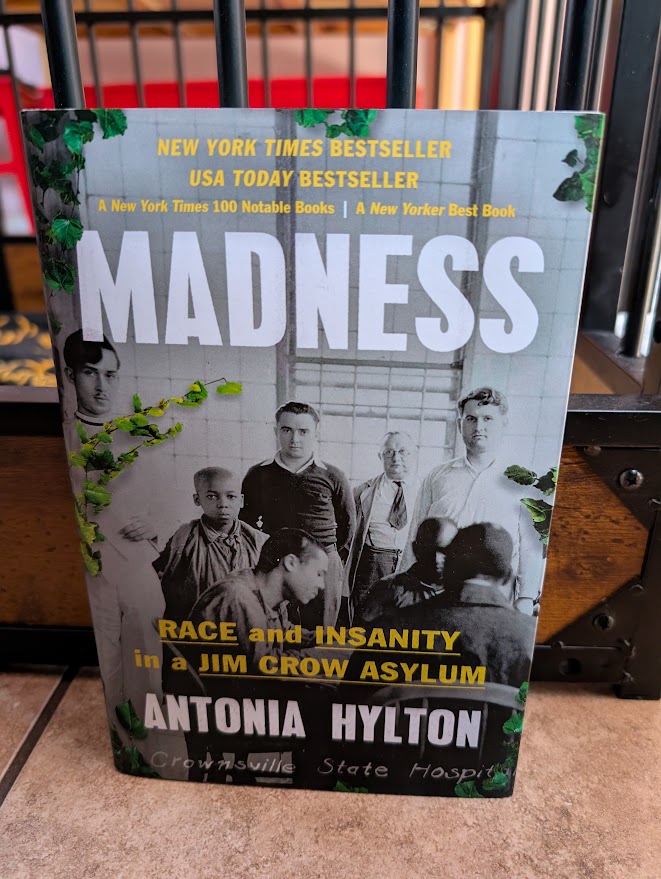
What’s the book? Madness: Race and Insanity in a Jim Crow Asylum by Antonia Hylton

How dark is it? Dark like a hospital without enough windows

How good is it? 8/10 emotionally, 5/10 as a history

This month’s Morbidly Curious Book Club selection was Madness: Race and Insanity in a Jim Crow Asylum. It’s centered on the Crownsville hospital, built as a mental institution for Maryland’s black residents back in the days when the state was still segregated. It is an astounding coincidence that I spent part of my childhood in a town not far from this hospital and never knew it was there. Google maps tells me it’s a fifteen minute drive from the house I grew up in. I have clear memories of a few of the places talked about in this book. I haven’t lived in Maryland since last century but I have siblings in and around Baltimore. As I said, this is all just a big coincidence and I didn’t choose this book myself but knowing the area gave me an added layer of interest and an emotional connection I hadn’t expected. On top of that connection, I also spent several years doing housekeeping for a mental hospital when I was younger. Ever since then I’ve had a small personal interest in the history of mental health treatment and the thorny issues of institutionalization. Because of all that, I’m not sure I can be objective about this book. I found it fascinating and emotionally compelling, but how could I not? 

This book is a history of the Crownsville State Hospital in Maryland, built in 1911 as the only mental health facility serving black people back when the state was still segregated. It’s a history of that hospital but it also uses Crownsville’s history as the starting point for a larger discussion about race and the mental health system in the U.S., focused on how it serves (and too often fails to serve) black Americans. It relies heavily on interviews with former patients and staff, oral history, and personal interactions the author’s family has had with the mental health system. 

As a history, it’s not the best. Crownsville’s records are spotty for various reasons so putting together a thorough history is already a tall order, and Hylton hits a lot of major themes in the history of mental health care but she isn’t even trying to be thorough with that. She jumps around a bit between places and time periods, which made it hard to form an orderly timeline or historical picture as I read. Hylton also comes at this history without any special understanding of mental health so she sensibly avoids deep discussion about treatment philosophies and challenges, especially in the time before drug treatments became common. I find that kind of discussion fascinating and I felt the lack of it, but it’s fair that Hylton’s interest lies elsewhere. 

Hylton’s interest centers more around broad historical and political trends and personal experiences. Most of the stories, especially as she talks about the sweep of history beyond Crownsville, are chosen more for theme and emotional resonance than historical completeness. 

This book absolutely excels on the ‘theme and emotional resonance’ front, though. Hylton clearly wants to open our eyes to two facts: one, that the larger background of racial tension and discrimination can complicate and contribute to mental health struggles for individual black folks and two, that those struggles are made worse by the very good reasons those black folks have to distrust the mental health care system. By focusing deeply on personal stories of former patients of the Crownsville hospital and of many caring but under-resourced employees, Hylton really drives those facts home in a compelling way. 

Now that I’ve highly recommended this specific book, I’d like to say a few words about my general book club experience so far. This is the third pick I’ve received from this book club and I’m beginning to worry that it’s actually the Very Important Issues book club that wants to justify its darkness by making sure each book I receive teaches me deep and important lessons. I don’t need my totally voluntary book club to apologize for liking morbid topics or make up for its darkness by acting very very virtuous. I enjoyed this book and I do think it’s very very virtuous and very very important, but I do hope this club sends the occasional book that’s just darkly historical and entertaining. 

Stubs: Part 2

It’s the Friday before Independence Day here in the USA, which means we’re all too busy loving/hating America to read full reviews. It’s also the day after my birthday and I’m probably getting a tattoo as this goes live. Yes, we all lead very full lives and today I’m just leaving some quick mini-reviews here of a few books that didn’t quite fit the normal profile for one reason or another. Enjoy.

Most Delicious Poison

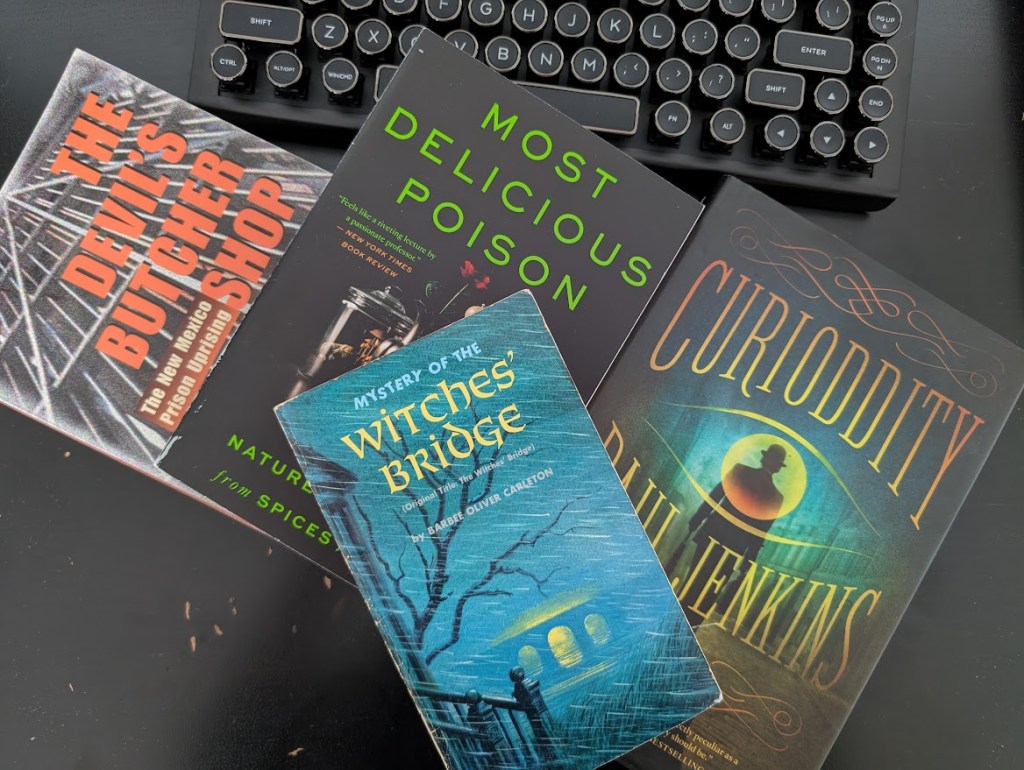
Written by Noah Whiteman, the title Most Delicious Poison: the Story of Nature’s Toxins from Spices to Vices pretty much sums it up. I dip into history and popular science on occasion, and this one delivers some pretty interesting info about how plants protect themselves and how humans have learned to use those defensive chemicals as flavorings, medicines, and recreational drugs. The book is inspired by Whiteman’s struggle to understand his father’s debilitating problems with alcohol, so along with exciting stories about medicine and interesting facts about flavorings, we get vulnerable discussion of the more dangerous uses of plants. It’s not exactly our usual Darker Books fare but I found it fascinating and quite moving in parts. 

Mystery of the Witches’ Bridge

Last October we stayed at the McCoy Hotel in Tucson, which had a cute red desk with a pile of paperbacks on it for our reading pleasure. This was in the pile. It’s a mystery for youngsters written by Barbee Oliver Carleton; the internet has precious little about her but she apparently wrote a lot of stuff for youngsters. This book is kind of quaint and cute, with detailed and interesting descriptions of the Massachusetts wetlands where it’s set. It’s not particularly spooky or exciting but it’s fun in a Nancy Drew/Hardy Boys way.

The Devil’s Butcher Shop

Last Halloween I wrote a bit about the New Mexico State Penitentiary, which is probably haunted because of the deadly prison riot of 1980. Back then, I said I’d bought a book about the riot but I hadn’t read it yet. This is that book. The main reason I’m making this a stub instead of a full review is that, even for a hardened true crime enthusiast like myself, this is a hard book to get through. It’s not for everyone. Still, I was riveted by Roger Morris’s book, which details not only the riot but the appalling mismanagement leading up to it and the shocking lack of consequences afterward (both for the murders committed by rioters and for the negligent and corrupt managers of the prison). It was thorough and moving, and I appreciated the way Morris built sympathy for the prisoners while making it clear that the actions of many prisoners during the riot were also inexcusably awful. This one will stick with me a long time and I’m glad I read it, but it’s definitely one of the darkest books I’ve ever read. 

Curioddity

This one, by Paul Jenkins, is the opposite of dark. I bought it at an occult book shop in Tucson and it’s got a mysterious cover so I thought it would be at least a little dark. Instead I got a rollicking absurdist adventure with a lot of goofy humor. The book is not set anywhere in particular but Jenkins is a British comic book writer, which explains why the book felt so much like a Douglas Adams or Terry Pratchett project. It also explains the main character, Wil Morgan, who is exceedingly straitlaced and depressed about life; he’s constantly baffled and disconcerted by the zaniness suddenly springing up around him even though it’s making his life better by leaps and bounds. This type of straight man seems common in British comedy. Anyway, the book is fairly funny and if you like British goofiness you should read it. But it isn’t dark. Not even a little bit. 

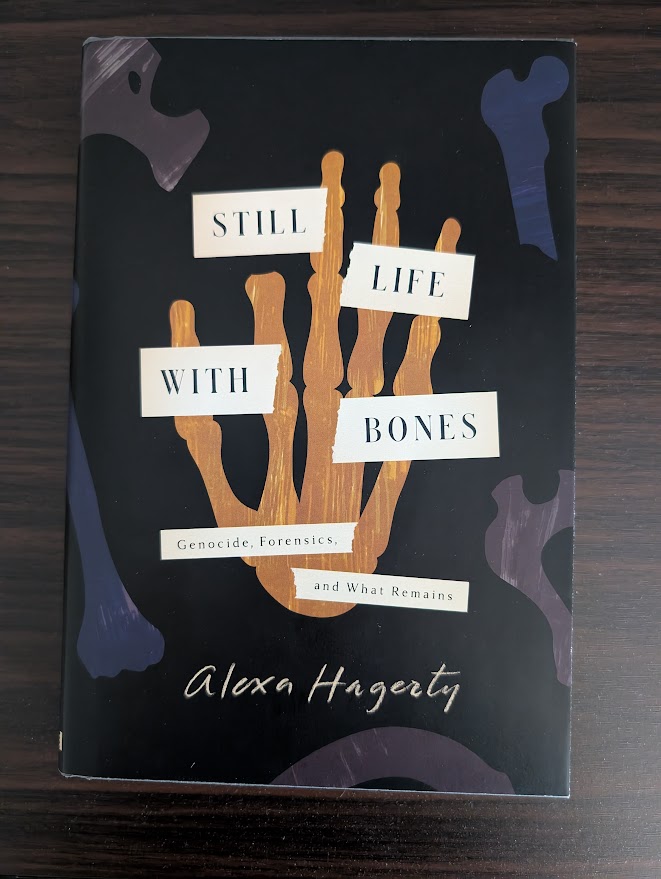
Still Life with Bones: a Review

What’s the book? Still Life with Bones by Alexa Hagerty

How dark is it? It’s about real atrocities so . . . it’s pretty depressing

How good is it? 6/10

This was the Morbidly Curious Book Club‘s latest selection so I didn’t come into this book with any particular expectations. I read it because they sent it to me. Turns out it’s mostly about the author’s experience exhuming mass graves in Guatemala and Argentina as part of her anthropology studies. It’s a little bit about bones and the stories they tell, a little bit about exhumation and the various ways it’s viewed, and a lot about the atrocities perpetrated in both countries during certain periods of time.

The last part was the most interesting and informative to me. I grew up in the 1980s and ’90s, vaguely aware that shit was going down in South America and President Reagan was somehow very involved, but I was way too young to understand any of the details. I remember U2 mentioning El Salvador in their songs and stuff but I didn’t really know what they were talking about. In fact, somewhere in the middle of this book, reading about the Madres de la Plaza de Mayo, I realized they’re who that song “Mothers of the Disappeared” was about. I feel a little dumb now because I always thought that song was a metaphor. (To be fair, I was in middle school when that song came out.)

In parts of this book, Hagerty explains La Violencia in Guatamala and the Argentinian junta that kidnapped thousands of supposed dissidents, tortured them extensively, and dumped their bodies when they were done. These chapters were sad and horrifying and enlightening. They made me want to know more about the history and politics behind it all. These chapters were also the hardest chapters to read, by a long stretch, because they detail some of the horrific crimes behind the mass graves being investigated now. The discussion of Argentinian torture especially got to me, mostly because it was so perversely creative in its cruelty. It feels important to witness and condemn such things but it’s also hard to read over breakfast.

The rest of the book was more personal and poetic, more centered on Hagerty’s own experience and musings. In many ways, she becomes a stand in for the reader, giving us a single human perspective to guage these enormous events by. Her focus on her own emotions and thoughts gives us suggestions on how to shape our own emotions and thoughts about the subject. Sometimes this filtering makes the whole subject easier to handle but it also puts us a step farther from the action that makes it a little too easy at times. Instead of relating to these survivors and witnesses directly, we’re relating to Hagerty as she relates to them. At times, she becomes the subject in a way that feels a bit self-involved. Once in a while I got a whiff of that pampered American ‘their tragedy is so sad for me‘ rot.

But it was only the occasional whiff; for the most part I appreciated this book and the attempt it made to condense a huge and difficult topic into a relatable story for a mass audience. As such, it was a good introduction that made me want to do some more serious research some day.

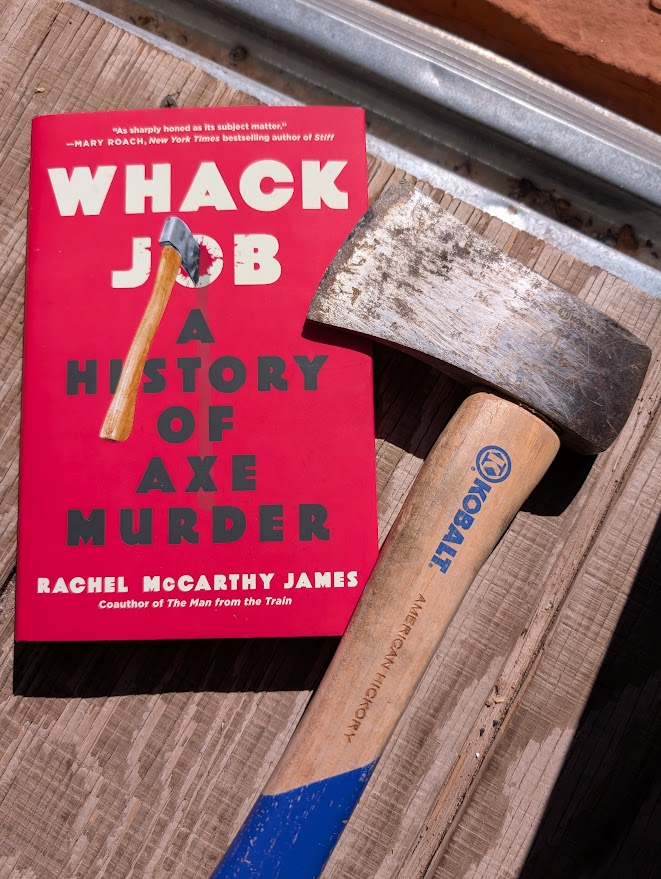
Whack Job: a Review

What’s the book? Whack Job: a History of Axe Murder by Rachel McCarthy James

How dark is it? Blood red, I suppose. Is that too on the nose?

How good is it? 2/10 hatchets

We only own a little hatchet, not a full-grown axe.

This book is less than 250 pages long. I don’t expect a thorough history of anything in that few pages, much less a history of both axes and murder. The first chapter introduces the far tighter exploration of how axe murder became a cultural meme, almost a joke. Okay, yeah, you could maybe do justice to that in 250 pages. Then we jump way back into prehistory and I know we’re in trouble. 

In trying to tell stories all the way from prehistory to the 21st century, the author has to settle for bare sketches and snippets. It would require heroic summarizing skill to do any of these stories justice in just a few pages, and this author does not have heroic summarizing skills. In describing the tragedy at Taliesin, for example, so much time is spent explaining Frank Lloyd Wright’s complicated love life that we barely have descriptions of the actual murderer or most of his victims. Confusion or meandering in the oldest cases might be excused by the lack of details and evidence handed down through the ages, but the modern well-documented cases are also summarized in unsatisfying ways and I was sometimes baffled by her choices of what to dwell on and what to leave out.

All this makes the book feel incoherent, more like sketches of vaguely axe-related moments in time than an actual history of any kind. This feeling of incoherence is compounded by the political lessons the author forces onto many of the stories, often with very little explanation or argument. The story of Stesagoras’s murder (an ancient one) seems chosen mostly as a dig at fascism and Trump’s infamous border wall, and many of the early American stories seem chosen primarily to remind us that slavery is bad and the U.S. did not (does not) treat Native Americans very well. All these things are true and important to talk about, but they’re not very axe-related and honestly, shoehorning these messages into such a light book doesn’t do them justice.

And speaking of American history, fully half of this book is devoted to U.S. axe murders. Again, they seem chosen not with an eye to explaining how axe murder became a pop culture thing, but to make various other points. If they were chosen with an eye to cultural significance, she might have included the Axe Man of New Orleans or the Villisca axe murders or highlighted some modern axe murders from beyond the United States. Some of the cases she chose were interesting but again, there was no sense of a coherent throughline. Just before the end, the author devotes a chapter to The Shining and So I Married an Axe Murderer as an attempt to tie everything back to pop culture but with no throughline to the previous chapters, this movie chapter felt jarring and out of place. It was especially jarring to jump from So I Married an Axe Murderer right into the grisly and sad murders of two Missouri men in 2019. That combo gave me emotional whiplash.

This book tries to weave together a whole lot of threads–axes, political history, true crime, pop culture–and it doesn’t do any of them justice. This book disappointed me greatly. That said, there were interesting tidbits here and there and I actually enjoyed the tiny interlude chapters explaining various historical axe types. I learned a bit about different axe designs and their various pros and cons. Turns out a history of actual axe design might be a real page-turner for me. This book, however, was not. 

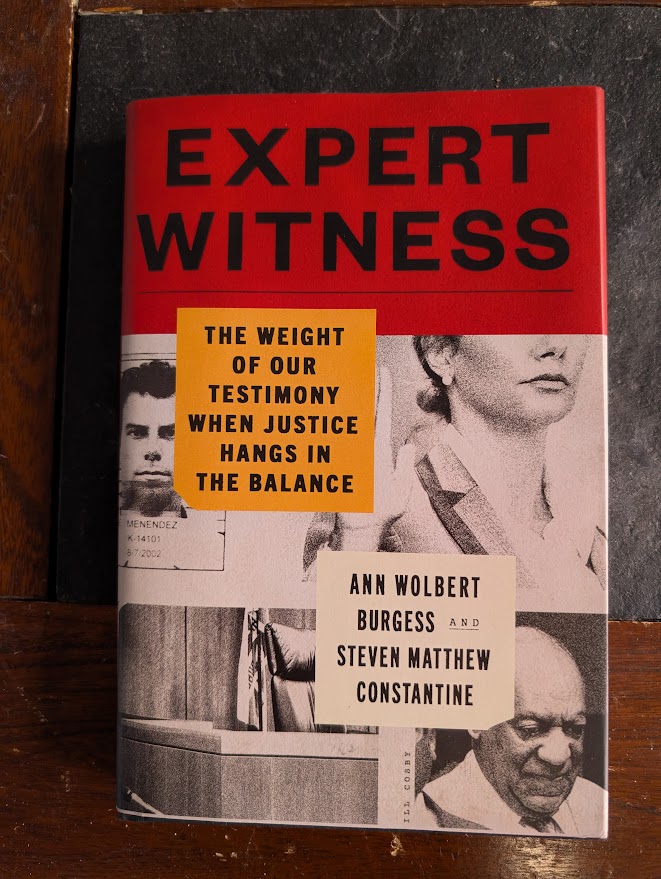
True Story Tuesday: Expert Witness

What’s the book? Expert Witness by Ann W. Burgess and Steven M. Constantine

How dark is it? A nice greige, maybe? It’s not very graphic but it does discuss real crimes.

Is it good? On a scale from 1 to 10 gavels. I give it 8/10 gavels. Thoroughly gripping.

A few weeks ago I joined an online book club with a subscription service. Every month they send me a new bit of dark non-fiction and at the end of the month, they discuss it online. While I devote myself generally to fiction on this blog, I also like a true dark story. This seems like a perfect way to get my non-fiction fix.

I thoroughly enjoyed this month’s book. It starts with a bit of history, explaining how expert witnesses became a part of the legal process, but after that it becomes a deep dive into Ann Burgess’s greatest hits. I was hooked immediately; Ann Burgess has been involved in some monumental court cases. 

She’s generally an expert in trauma responses and the psychology of sexual violence, so the stories center around perpetrators and survivors of sexual violence. After discussing one of the first cases she worked on (which is not famous so she vagued up the details to protect the innocent) she tells us about her harrowing interview with Erik Menendez, her work on the Duke lacrosse team case, and her involvement with survivors of the horrendous crimes of Bill Cosby, among others. 

One of the main things that draws me to true crime is learning what goes through the heads of everyone involved, and this book focuses on exactly that. It’s detailed and insightful while still being quick and readable for the average citizen. It also feels like Burgess chose cases not just to highlight her high profile work but also to give us a well-rounded look at the psychology of victims and perpetrators alike. She puts a heavy emphasis on experts trying to be objective and careful in their assessments, without jumping to conclusions based on how sympathetic (or unsympathetic) a person is. The Menendez interview she details early on is a great example of her approach, I think.

In some ways, the book feels a bit shallow. I wouldn’t have minded a little more history and discussion of the big picture, or a deeper dive into the state of research on the psychology of trauma. I’m sure Burgess knows a lot about that and it sometimes feels like she’s holding back, expecting most readers to be focused on the famous cases and less interested in her actual research. I loved the former but I also would be fascinated by the latter. Still, this was a page-turner and I did enjoy her insights, which went much deeper than the average podcast or true crime documentary. It was definitely worth my time if only for that.

Stubs: Part 1

Sometimes I read a book that inspires thoughts and feelings, but not enough thoughts and feelings to inspire a full review. (Often the book just isn’t dark in the way I was hoping it would be.) Even the way I write, with lots of asides about where I bought the book and what random thoughts I had while reading, there’s just not enough for a coherent thousand words or so. When this happens, I save them up and throw together some mini-reviews. Let’s talk about three of these books:

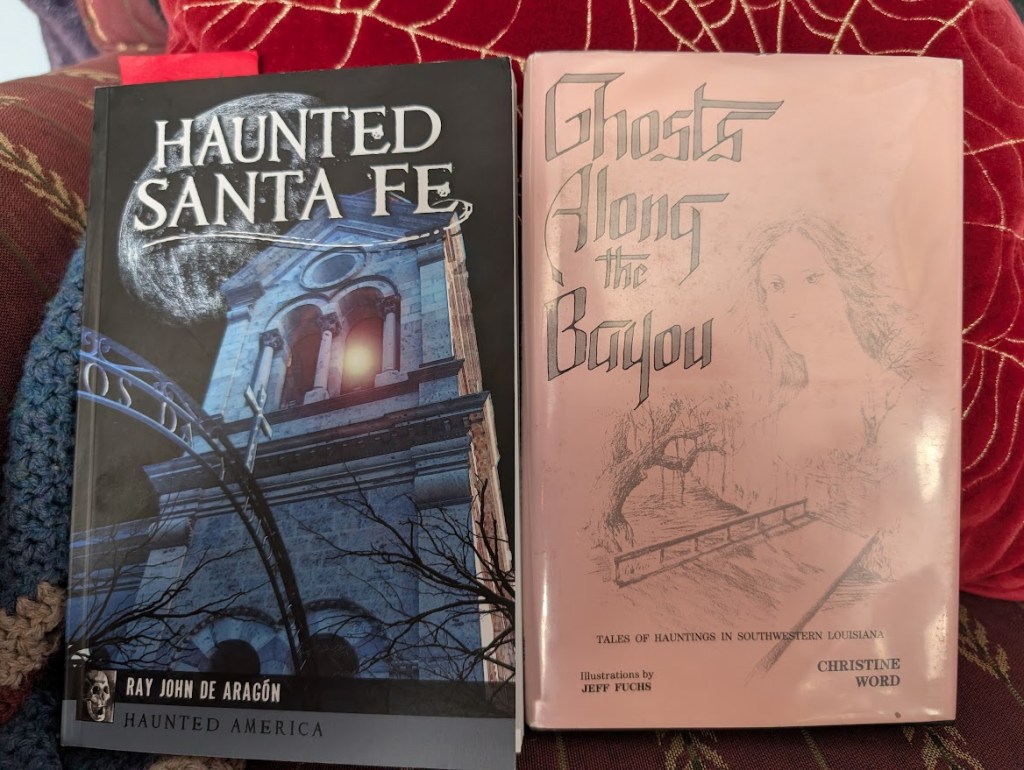
Ghosts of Denver: Capitol Hill by Phil Goodstein

This didn’t merit a whole review because it’s not really about ghosts. The spooky font and haunting line drawing on the cover promised me ghosts galore, so I was bitterly disappointed to find nearly six hundred pages and almost no ghosts at all. This is about 5% ghosts and lurid tales of Denver hijinks, 95% very detailed history of the Capitol Hill section of Denver focusing largely on architecture. I love history included with my ghosts stories, especially when that history involves colorful locals and either criminals or disasters. I like architecture and I’ve actually spent a few hours looking at cool buildings in the area this book is about, but this is way more detail than I ever wanted. 

I did learn a handful of interesting things, though. I learned that Denver used radium tailings in some of their roadbeds, which made them radioactive enough to require cleanup efforts in the 1990s. I learned that 1920s Denver was kind of run by the Ku Klux Klan. I learned that during the Great Depression, movie theaters used to raffle off groceries. (That’s much more wholesome than the radium roads and the Klan thing.) There are a couple strange stories of murder and a couple of interesting ghost stories, but this book felt like a bait and switch. They lured me in with the promise of ghosts and then made me learn about city planning.

Reprisal by Arthur Gordon

Funny enough, I grabbed this book in Denver’s Capitol Hill area. I’m pretty sure I got it at Kilgore Books, a few blocks down from the fittingly named Capitol Hill books, where I got the ghost book with no ghosts in it. I was pressed for time on this book-finding trip so I grabbed several books based on hunches and cool titles, and this was one of them. 

Turns out Reprisal is trying to show us the complexities of race in the Jim Crow south. It was written in 1950 by a rich white dude from Savannah, Georgia so . . . he nails it, obviously. Deep and rich understanding of the grievances and injustices that led to the Civil Rights movement soon to gain momentum and sweep through the south.

Just kidding. He doesn’t nail it at all. It’s awkward and unsatisfying to read. The center of the story is Nathan, whose wife was lynched along with three friends. Several of the men involved were eventually brought to trial only to be acquitted by a jury of their white small town peers. When Nathan hears of the acquittal, he returns to Georgia to take justice into his own hands. This part is interesting and Nathan is a sympathetic character. Unfortunately, our author spends most of the novel following various characters who aren’t Nathan, trying to present a wide range of views on the lynching in particular and race in general. (Of course, most of these characters are white.)

There are so many characters that none of them are particularly deeply drawn and following them all bogs down the story’s pace while not saying anything particularly enlightening about race or segregation. In the story’s first few pages, a reporter wants to cover the trial and its aftermath and his editor warns him that “if you’re going to tackle the race problem–which has been hammered almost to death lately–try to write about the negroes as people, will you? Not symbols of suffering humanity or shuffling clowns. If you can make ‘em people, with fairly coherent thoughts and reactions and emotions, you’ll have done something no other feature writer has done yet . . .” This feels like the author’s mission statement and honestly, I’m not sure he succeeded. Maybe by 1950 standards . . . . 

To be fair, I don’t know what book from the pre-Civil Rights era south would meet a modern reader’s standards. It does seem like Gordon was trying to fight racism in some way with his book, which is more than most authors were doing. This book kinda sucked on both a technical and a moral level but I found the attempt weirdly interesting to think about. 

The Broken Gun by Louis L’amour

I picked this up at a used book shop purely because I wanted to try out Louis L’amour. I was booked to stay at the historic Strater Hotel for a weekend and Louis L’amour apparently stayed and wrote there often, preferring room 222. There’s a little brass plaque on the door now commemorating him. I thought it would cool to read L’amour in the hotel where he stayed. For the record, it was cool and this is a good book. It’s not my usual dark vibe, though, so an entire post on this fun L’amour book I read for goofy reasons felt like too much.

This isn’t one of L’amour’s most famous books, it’s just the one I happened to find the day I went looking. This one is set in the 1960s (and also written in the 1960s), following a writer of Westerns, Dan Sheridan, as he researches an old mystery and ends up in deep trouble. He visits the remote ranch of Colin Wells for research and immediately starts to realize Wells means trouble. Stuck in the Arizona wilderness, miles from help, Sheridan looks for a way to escape while trying desperately to figure out why Wells would want him dead at all. 

It’s a tight mystery with exciting action and interesting wilderness survival scenes. L’amour is more famous for writing what his character Sheridan writes, historical frontier fiction, but if all his books are as tense and tightly written as this I can understand his fame. Used bookshops here in the southwest are usually well stocked with L’amour so I’ll probably grab more eventually. Maybe he’ll show up in the next Stubs post I put up. Who knows?

As always, embrace the darkness here or on Substack. Read more (and darker) books! Happy New Year!