
This review first appeared on our Substack in 2025. This is a repost.
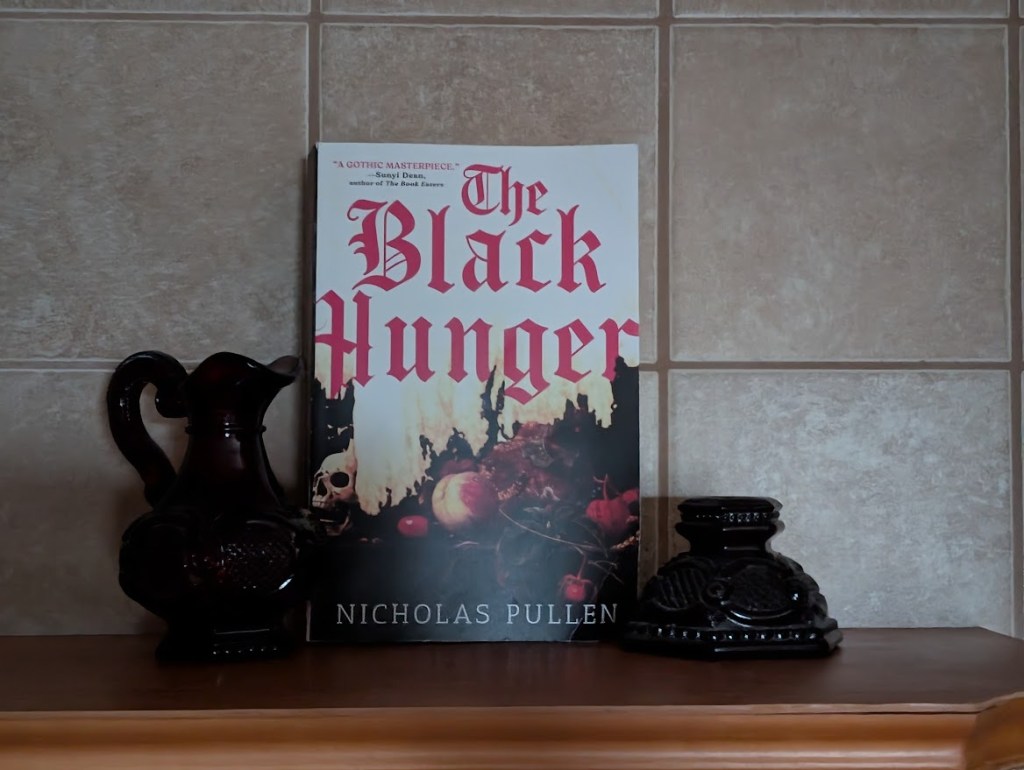
Let’s talk about The Black Hunger by Nicholas Pullen. This is a new title, published last year, with a quote on the cover calling it a “gothic masterpiece.” The quote is from Sunyi Dean, author of The Book Eaters, which I read sometime last year. Honestly, I should not have taken this as a ringing endorsement.
I liked The Book Eaters okay, it had a cool premise and decent action, but the flat characters left me cold. How did I expect this new book, recommended by the author of flatness, to have anything but flat characters that also left me cold? These two books are very different but they have the exact same positives and negatives. Great concepts and interesting world building but characters so flat they felt like afterthoughts.
The Black Hunger is set in the British empire of the early 1900s, following John Sackville and his faithful manservant/lover Garret Benson from the hallowed halls of Oxford all the way to India and then into Tibet and Mongolia as they try to foil the plot of an evil Buddhist cult. This alternate mythology, where the future of the world hinges on the various sects of Tibetan Buddhism fighting the unholy Dhaumri Karoti, is great. It’s interesting and original and exciting. This feels like the dream Pullen just had to put into words–he’s clearly put a lot of thought into creating a rich world surrounding this alternate Buddhist history. Whenever the book centers on this–when we see the cultists’ dark rituals, when we follow John and Garrett to meet the Dalai Lama, when we read flashback sections of previous encounters with this cult–the book comes alive. It all feels real and electric. Really, I can’t say enough good about these parts.
When we’re not directly following the cult’s action, though, the story falls flat. All the characters feel fairly wooden, heroes and villains alike, and nothing is told with the same vibrancy and detail as the culty bits. I didn’t find John or Garrett very interesting and their great love affair felt a bit like a convenience. They grew up together and remained unfailingly loyal to each other to the end of the story. If they’d been more deeply written, this would have been a great love affair tinged with the sadness of having to hide themselves from a prejudiced world. It’s clear that’s what their love was supposed to be, but I was unconvinced. They just didn’t feel very real or deeply motivated by anything; maybe this is true love or maybe it’s just too hard to meet other gay men in that cultural climate. John and Garret felt more like a step on the way to the cult action than anything else.
The villains are even more flatly written. Flat villains aren’t always a problem but the deep world building around the Dhaumri Karoti suffered a bit from the cartoonish villainry of the bad guys. The cult is based around the idea that one way to end suffering is to follow the traditional Buddhist teachings of detachment and right action, and another way is to just kill everyone. There can be no suffering if there are no beings alive to suffer. This is an interestingly scary alternative with great potential but it also makes us wonder what would lead someone to choose the dark second option. What despair would make that seem the right choice? That’s what I wonder, anyway. Apparently no one in the book wonders this at all–the Dhaumri Karoti all seem to do this purely for evil and bloodlust. Officially, they’re trying to end all suffering but they take pure delight in causing as much death and suffering as they can along the way. They don’t even try to justify it. It sometimes feels implied that they’re like this because they’re colonizers or because they’re serf-holding Russian lords, and that’s just how those guys roll. Even this could be interesting but the lack of character development just left a lot of thematic implications totally unexplored. I found that really unsatisfying.
Still, that whole Buddhist apocalypse cult thing was a really exciting idea. I’m fascinated by cults and apocalypses and the Dhaumri Karoti delivered on both counts. This is Pullen’s first novel, I’m pretty sure, so he has room to grow. If he can get as excited about his characters as he is about his alternate religious history, we could see great things from him in the future.

