Odd Thomas: a Review

Let’s talk about Odd Thomas by Dean Koontz. In almost every used bookstore I’ve been to, the horror section is one or two sad little shelves full of mostly Stephen King and Dean Koontz. Honestly, I didn’t even know Koontz wrote horror until I realized he’s always on the shelf next to King. I picked up Odd Thomas because I wanted to check out this second guy dominating the horror shelf and thirty seconds of googling suggested this was a popular title. Turns out this is the first in what became a whole series (and it’s mostly luck I grabbed book one instead of, like, book five). I’m not sure whether Koontz always had a series in mind or decided that after Odd Thomas blew up, but this reads just fine as a standalone novel.
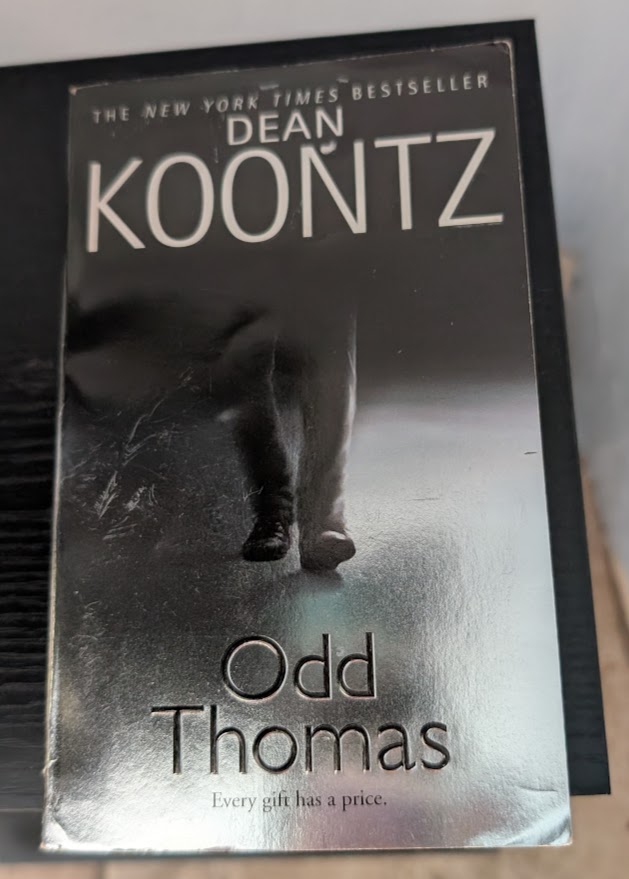
Odd sees dead people. He’s a fry cook at the local cafe, he’s got a girlfriend named Stormy he wants to marry someday, and he sees dead people. He also sees shadow people and occasionally gets premonitions when something evil’s about to happen. He’s been having the same nightmare for ages, people lying dead and bloody, and it looks like his nightmare is about to come true. 

This book is pretty good. Odd himself (and yes, Odd is his actual first name) is pretty likeable. He just wants to help people, checking on his landlady every morning, actively trying to hone his cooking craft, devoted to his girlfriend, and willing to drop everything for a ghost in need. He’s not a very deep or complex character but we can sympathize with the trouble his “gift” causes and we find out some tantalizing details about his childhood and his dysfunctional family as the story unfolds. The plot is the main thing here, though. It ramps up nicely as Odd gets just the worst vibe from a cafe customer and becomes convinced this guy is about to do something epically evil. He gets himself into various tense and scary situations as he tries to figure out what’s about to happen, where and when. His gift is hard to explain and even harder to prove, so he tries to keep a low profile as he investigates but in the end he has to jump right into the crisis. 

It was a fairly exciting story and I’m about to give you a big spoiler, so skip this paragraph if you want to preserve the surprise. (This book is over twenty years old but I hadn’t read it until now so maybe you haven’t either.) Okay, spoiler time: there are actual Satanists involved and the book ends with a mass shooting. The Satanists felt like a silly ‘80’s throwback but the mass shooting felt both tragically relevant and oddly underwhelming in today’s world. He spends the whole book building up to a tragedy that will rock the world and I’m sure when this came out in 2003 this active shooter scenario packed a punch. Now it feels more depressing than shocking, and the villains doing it purely for the glory of Satan feels almost mockingly cute. Still, how could Koontz know what the future would become? I don’t hold this against him. 

So the ending doesn’t hit now the same way it would back then, but I wonder if Odd’s childhood trauma hits even harder now that trauma is such a visible topic? Koontz doesn’t seem like a deeply psychological writer, but he does a bit of exploring of some deep trauma beneath Odd’s sunny exterior. I wonder if he explores that in the rest of the series. Someday I’ll have to pick the sequels off the sad secondhand horror shelf and find out. 

As always, read more and darker books. And follow us here or on Substack.
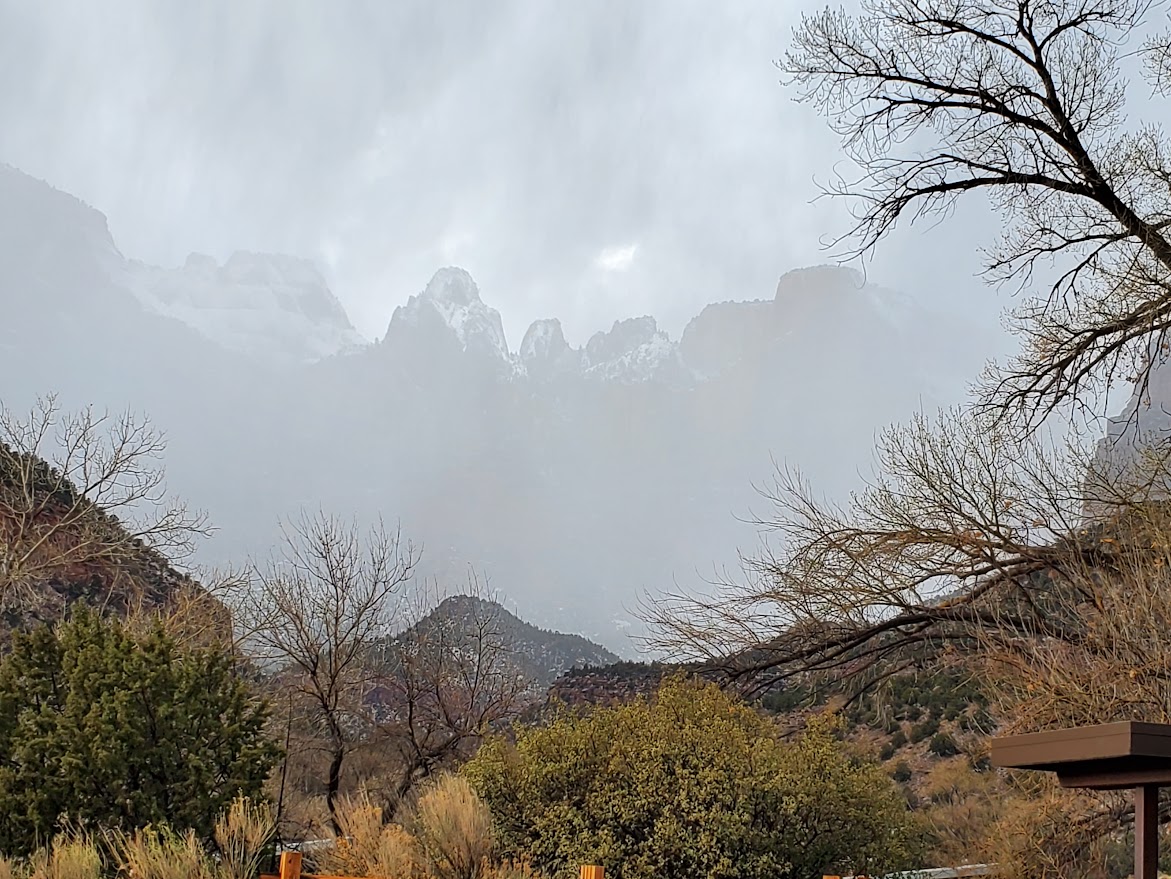
The Angel of Indian Lake

The Angel of Indian Lake is the last book in an amazing trilogy. The trilogy begins with My Heart is a Chainsaw (read the review here) and continues with Don’t Fear the Reaper (read the review here) before wrapping up with this one.

What more can happen to Jade Daniels? What more can really be done in a town as small as Proofrock, Idaho? Apparently quite a bit as it turns out. Jade has fully stepped into the shoes of her beloved Mr.Holmes as the high school’s new history teacher. This is in spite of a severely checkered past and a record but that’s nothing Letha Mondragon’s money and influence couldn’t overcome. Letha and Jade go way back at this point and Jade is “Aunt Jade” to Letha’s daughter. On paper, things have really improved for Jade. Off paper, Jade is barely keeping herself together when things start to happen again. 

Like in the earlier two books, it isn’t a singular murderer or supernatural force attacking Proofrock. This time though, it took me much longer to parse what all was going on and who was doing what. I mean that in the best possible way. The national forest gets set on fire AGAIN. There is a multi-bear rampage. I audibly gasped when that happened. There are zombies. We finally get to the bottom of why Rexall is the way he is (and get some satisfaction in that regard). There is so much more. Things move at a breakneck pace but the action is still punctuated by Jade’s thoughts and visits “to the video store.” 

I am a big fan of a trilogy. Three is my goldilocks number of books in a series I think. Like any really solid trilogy, you need all three of these. Each book brings something new, something essential, and Jade is a new flavor of herself as time and the story wear on. I think the idea of picking a favorite book out of three that belong together is pointless but I will say that this third version of Jade is my favorite. I believe her. Something I have appreciated about Graham Jones’s writing throughout is the authenticity of his characters. How they react and change after all the violence and trauma makes sense for human beings. Jade is the best example of this. She’s pretty poorly adjusted but masking like a champion and trying her damnedest to just live some kind of life. Even when things kick off again, her continued vulnerability is what makes her worth reading about. She is not a Sarah Connor or Ripley. Who would be? She is damaged inside and out with fewer toes than she started all this with. She’s broken in ways that make sense while still trying to move forward and I find that really endearing. 

This book is going to break your heart in more than one place. And yes, I know the second one did too. The first one also. But this one really did me in a couple of times. Trust me though, It’s worth it. 

As always, follow us here or on Substack. Have a thrilling week and read more (darker) books!
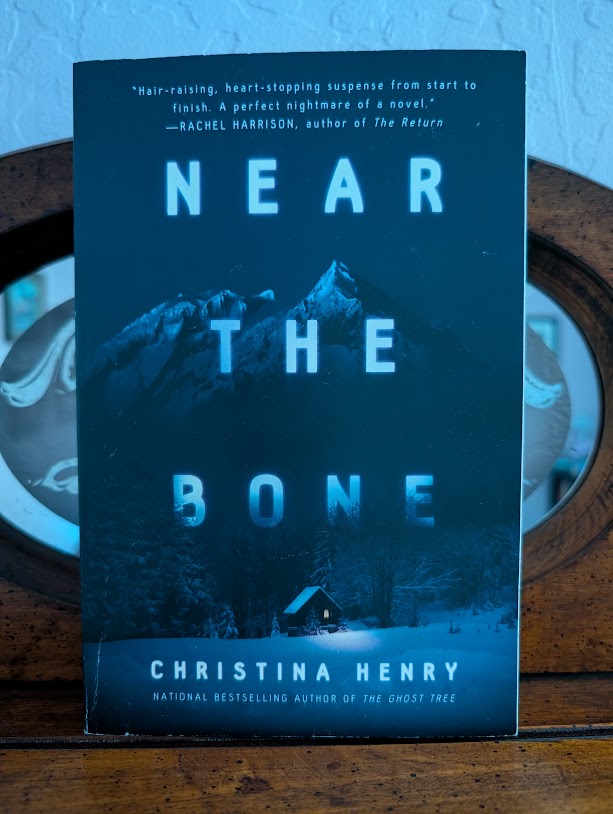
Near the Bone

I was excited to read Near the Bone because years ago I read one of Christina Henry’s other books, one of her series inspired by Alice in Wonderland. I remembered liking it; the Disney version of Alice really freaked me out as a kid with its black backgrounds and creepy dream logic, so I was intrigued by Henry’s dark take on the tale. Near the Bone, however, didn’t impress me the same way.

As a voracious and dedicated reader of novels, I can’t believe I’m about to say this but Near the Bone should have just been a movie. As a book this kind of fell flat. 

Mattie lives on the mountain with her husband, William. Her much older, extremely religious, horrendously abusive husband. They are utterly alone yet he still watches her like a hawk, dictating her every move and timing her to the minute. She has odd flashbacks and thoughts–snippets of songs she shouldn’t know, tiny memories of a sister and a mother–that William insists are dreams and nonsense. 

And now, all of a sudden, there’s something new in the woods. Something hunting the animals and leaving their mutilated corpses in the trees. First the mysterious beast violates their carefully isolated territory, then a trio of cryptid hunters violate their territory as they look for the mysterious beast. William is not happy about any of this, and when he’s not happy Mattie is generally the one to suffer. 

Great set-up, right? This would be a great movie. Mattie fighting between fear and hope as she finally connects with other humans and maybe, just maybe, a chance to escape her husband’s oppression. Everyone, hero and villain alike, stalked by the mysterious beast. It would be tight and terrifying in the right hands. 

A book, on the other hand, usually lets you live with the characters over time and really get to know them. We can see deeper into their souls and follow their inner journeys as the plot unfolds. This is where movies based on novels usually fall short. With these people, though, their inner journeys just aren’t that interesting. We never see into the minds of William or the three cryptid hunters at all, really. We never know why they do what they’re doing in any real way. We follow Mattie’s inner journey quite closely as she begins to remember her life before William and gains courage in the process but honestly, it’s not that interesting a journey. 

Spoiler alert: it’s super clear from the beginning that William must have kidnapped Mattie at a young age and brainwashed her into being his child-bride. We never know why except that he’s a fundamentalist nutcase and we never know how he managed to cozy up to Mattie’s mother without setting off all the alarm bells in the world. Mattie’s inner journey gives us zero insight and she just reads as kind of a mishmosh of stereotypes and tv tropes. Trying to follow Mattie’s inner journey actually detracted from the rest of the action, which was actually pretty exciting when we got to focus on it. 

So yeah, it should have been a movie. Just show us Mattie and three cryptid hunters running around a mountain, trying to evade a mystery monster and a psycho kidnapper with a shotgun. Maybe a few brief flashbacks of Mattie’s previous life and how she’s suffered at William’s hands, so we can feel vindicated when he suffers and loses control of her. I can fill in her inner life for myself, and probably in a more interesting way than this novel did.

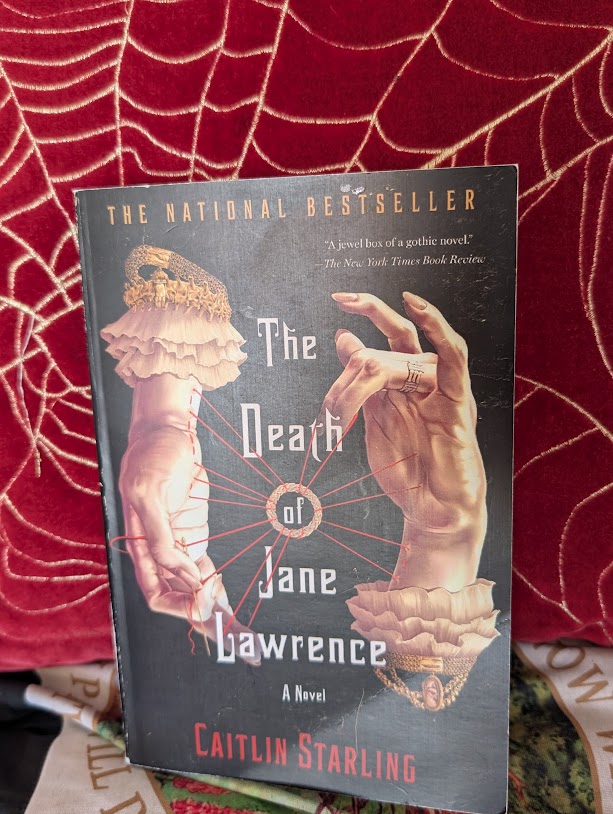
The Death of Jane Lawrence

I’m not sure where I picked up The Death of Jane Lawrence by Caitlin Starling. It might have been Barnes & Noble or maybe Maria’s Bookshop in Durango, Colorado. Either way, it’s mine now. I loved this book while I was reading it. Could hardly put it down. Once I was done, though, the doubts crept in. Now that I’m sitting down to write I’m not quite sure what to say. 

Victorian England was full of people trying to do magic and contact the dead. Seances and ceremonial magic were all the rage. It was also the heyday of gothic novels full of haunted country houses and dark family secrets. The Death of Jane Lawrence combines these elements to great effect. This book is set in a fictionalized version of Victorian England where the country houses are actually haunted and magic might be real. 

Jane, herself, is a bundle of trauma. The book isn’t clear about its alternate history but it seems war came to Britain when she was little, killing her parents and partially destroying her hometown. Jane has lived with the Cunninghams in another city since then. Mr. Cunningham has been offered an important post in Jane’s old hometown, now rebuilt and thriving, and Jane can’t stomach the thought of moving back there. She’s mathematically gifted and has a good head for business, but not even in magical fictional England can she just get a job and live on her own. Her best option, it seems, is a marriage of convenience to a suitable local man. 

She sets her sights on local doctor Augustine Lawrence, who could certainly use a business manager even if he’s unsure about marrying. Still, the two get along well and Augustine is quickly convinced to sign on to Jane’s marriage scheme. He has one odd condition, though. Once they’re married, he’ll spend every night at his family’s manor house and she’s never allowed to stay over. She’ll live at the office in town. Since Jane mostly sees this as a business arrangement she’s fine with this. It’s weird, sure, but it helps keep the boundaries firm around their arrangement.

That plan, of course, immediately falls apart. On the day of their marriage, they have dinner in Augustine’s mansion and then he promptly, anxiously, ushers her into a carriage as night falls. A heavy storm has started and, sure enough, less than a mile down the road the carriage is damaged in a mudslide and Jane has to trudge back to the mansion for the night. Their arrangement didn’t even last one day. 

Believe it or not, all this background takes up very little room in the novel. It’s painted quickly, in light brush strokes, and the real meat of the story is what happens in the manor house and all the magic Jane learns in the attempt to undo what happens in the manor house. The plot rushes along at breakneck speed, with most of the events occurring in a matter of days. Immediately after her wedding, Jane figures out that Augustine’s family home is deeply haunted (and so is he) and she undertakes some expert level ceremonial magic in order to set things right and save their brand new marriage. She’s especially keen to do this because, in spite of all their careful businesslike planning, Jane and Augustine are falling in love.

Most of the book is a disorienting round of magic rituals and haunting visions, where you’re never quite sure what’s real and what’s imaginary, what’s magical and what’s mundane. I found it compelling as I was reading it, racing to the end of the novel as Jane pushed through each stage of her grand magical working. By the end I was both deeply confused and deeply invested in Jane’s goals. Things got surreal, a bit gruesome, and deeply moving in moments. The writing itself becomes more choppy and quick, jumping from scene to scene in a disorienting manner.

And then the roller coaster ended, I had time to breathe and think, and I became less satisfied. Was this an elegantly written clash of realities or a cheap string of parlor tricks? What does the ending mean? Do Jane and Augustine live happily ever after as presented, or do those little ambiguities hint at something much darker? There are a few dark possibilities and no real way to choose between them. I’m still not sure whether that’s brilliant and tantalizing or cheap and annoying. 

I actually looked for opinions on the ending and was not surprised to find wildly differing takes. Some people believe Jane has learned the secrets of magic, though she’s trying to keep that secret. Some think she’s mentally broken, trapped in her own fantasy. Some think she’s dead. Considering the book’s title, that last is a strong possibility, but there are strong arguments in favor of other interpretations. I still can’t decide if this is an intriguing mystery or a frustrating non-ending.

I’m a sucker for all the Victorian occult stuff, though, and this book really swept me up in it. I enjoyed the hell out of it as I was reading, even if it didn’t stick with me in the most satisfying way. If you’ve read it, I’d love to hear your opinion on this book. Loved it? Hated it? What do you think the ending means?

Ancient Sorceries

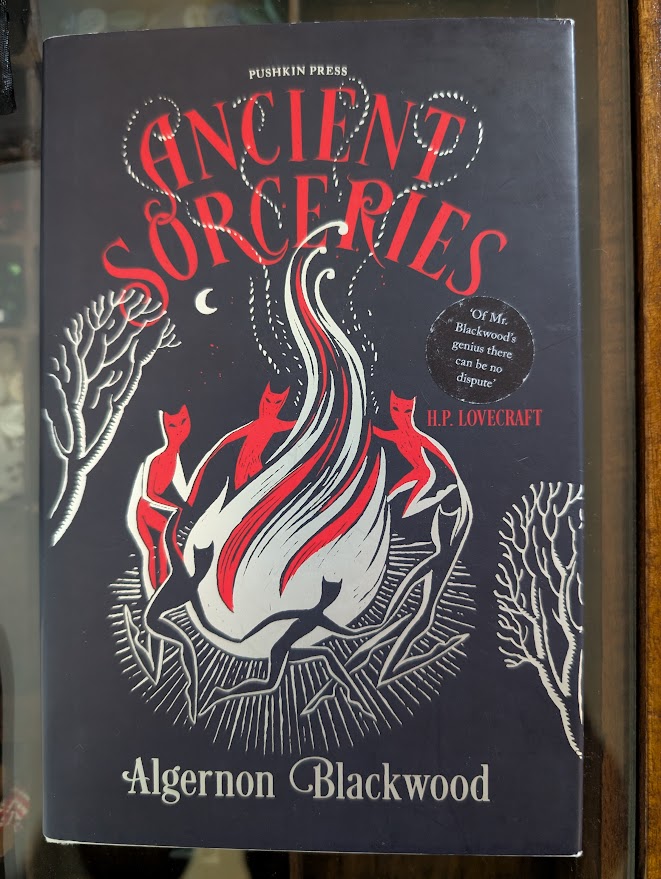
Let’s talk about Algernon Blackwood. Specifically, let’s talk about this cute little modern collection I picked up by Pushkin Press of four Blackwood tales. I think I got it at Barnes & Noble, maybe in Amarillo. It’s a hardback with a lovely cover all done in black and white and red. I love the font they used. As I mentioned, this collection has four of Blackwood’s stories–Ancient Sorceries, The Listener, The Sea Fit, and his most famous story The Willows

This book’s cover features an H. P. Lovecraft quote praising Blackwood. Lovecraft is arguably the more famous of the two, but Blackwood was a big influence on Lovecraft and honestly, Blackwood seems like a super cool person. Horror fans generally know by now that Lovecraft was kind of an unsuccessful shut-in during his life, and deeply racist even by the standards of his time. He wrote some amazing stories and his Cthulhu mythos has inspired some amazing fiction but he doesn’t seem like a guy most of us would enjoy knowing. Algernon Blackwood, on the other hand, travelled the world and had cool hobbies like ghost hunting and backpacking. He delved deeply into  buddhism and occult societies and people said he was pleasant company. He also has an excellent name; Lovecraft was not cool enough to be buddies with a guy like this and, to be honest, I’m probably not cool enough either. 

Blackwood wrote over a dozen novels and an untold number of short stories. I’ve only read a handful of his stories so far but I should probably dive deeper into his work. He’s a giant of weird fiction, writing not just horror and ghost stories but also many stories focused on awe and mysticism. These particular four inhabit a space that’s part horror and part cosmic awe.

The first story, Ancient Sorceries, follows Arthur Vezin, who visits a quaint little French town with mysterious goings-on. As he jumps off the train a fellow passenger shouts an urgent warning, but not knowing much French all Arthur can decipher is “because of the dreams and the cats.” It makes no sense until he falls deep into the mystery of this town and its witchy denizens. It’s quite a long story, verging on a novella, slow-paced and atmospheric. The whole town’s catlike quiet draws you in just as Arthur is drawn in. Well, he’s also drawn in by the innkeeper’s attractive and friendly daughter, who eventually insists that she knew him in a previous life . . .

The Listener is a ghost story. Much of the tension comes from wondering how much of the narrator’s problem is ghosts and how much is his delicate mental health. The tension and mystery build slowly up to some quite dramatic scenes near the end. There’s a dramatic reveal at the end I want to discuss so skip the rest of this paragraph if you want to be surprised. After a great build-up that this man is being truly persecuted by a malevolent ghost, the big reveal is that in life this ghost had leprosy. This explains a lot but I’m not sure this news has quite the punch these days that it once had. Finding this out was supposed to be horrifying, I think, but it mostly made me feel sad for this guy who died alone and friendless because of his disfiguring disease. Still, I suppose having leprosy doesn’t entitle your ghost to persecute others.

The next story, The Sea Fit, is a great example of Blackwood’s mixing of horror and awe. “Big Ericsson” is a sea captain with Norse blood in him, and sometimes when the sea and sky are just so, he feels the old gods calling him to join them in the storm. This is the story of one such perfect moment and by the end it’s hard to know whether to be horrified at nature’s attempt to claim Ericsson or to cheer on his glorious union with the sea. This story is quite short and simple compared to the others and quite satisfying.

The last story in this collection, The Willows, is probably Blackwood’s most famous. You’ll find it in anthologies of horror and weird tales and I think at some point I had to read it for school. This is my third time reading it, I think, and I enjoy it more each time. It’s much more about atmosphere and awe than surprise, so it keeps its power as you read it over and notice new details.

It’s a simple story about two men canoeing down the Danube River and running into something otherworldly. The first time I read this, I had to look up the Danube. I’d heard of it, I’m not totally ignorant of geography, but I’d always associated the Danube with all the cities it flows through. Once I read about the wetlands of the Danube Delta and looked up pictures of it, the isolation and otherworldly feel of the story made a lot more sense. 

The otherworldly forces these men encounter are fascinating, seeming to exist on another plane while only pushing on the edges of our reality, causing an eerie hum and making the willow bushes seem to shift in odd ways. They also seem to cause an eerie amount of bad luck for our travelers, almost as if they’re trying to trap them on this tiny sandbar they’re camping on. Trap them, or maybe worse. Ordinary things, like missing food stores and a worn spot in the boat they could swear wasn’t there last night; it all takes on ominous overtones on this shifting island with its maddening hum.

It’s quite suspenseful watching these two men try to hide, escape, and understand these mysterious beings and what they want. It’s quite a good piece of cosmic horror and has a quiet realism that makes it all the more effective. Every time I read a Blackwood story I’m convinced I should read more of them. If you’re not familiar with Blackwood this is a great place to start, and if you are familiar please tell me what else of his I should read next. I would love to dive deeper into Blackwood’s awestruck world.

As always, you can and should follow my sister and me either here or on Substack. And as always, you can and should read all the books you can lay hands on.

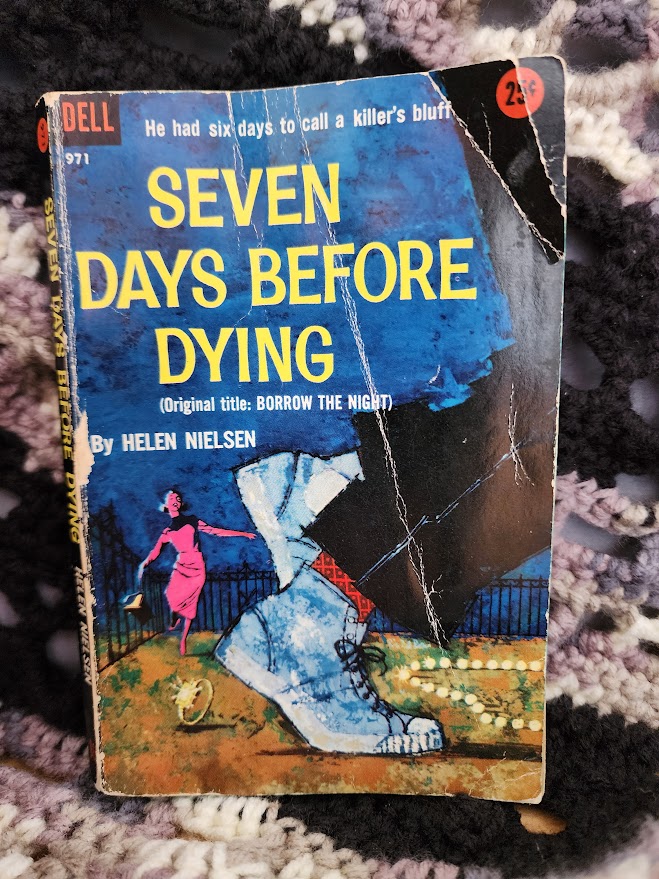
Seven Days Before Dying

Let’s talk about “Seven Days Before Dying” by Helen Nielsen. It’s also called “Borrow the Night” but I don’t really know why. A lot of these old pulp novels have multiple titles for mysterious marketing reasons.

This one is dark in that pulp fiction/film noir/mystery sort of way. I picked it up at Brave Books in El Paso, more or less at random off a table full of pulp novels. Like most of the books I picked up that day, this was a lucky find. But enough of bookstores. On to the plot:

Judge Ralph Addison has been getting death threats for the last six days. Seven months ago he judged and sentenced a young drug addict for the Christmas Eve murder of a woman up on Mulholland Drive, and he’s about to be executed for the crime. One day before the execution, the letter writer steps up the threats, calling Addison on the private line of his home office. Finally spooked enough to take this to the District Attorney, he finds another guy already there. The arresting officer in the case, Matt Coleman, has been getting similar letters all week. According to the letters (and now phone calls), when this kid is executed tomorrow morning, Addison and Coleman will die, too.

With a choice between tracking down the “Mr. Justice” of the letters or waiting anxiously at home, Coleman goes on the hunt and Addison follows. As their last day wears into night, the search becomes less about Mr. Justice and more about finding out who the real Christmas Eve killer might be. 

I don’t want to give too much away so I’ll leave my summary there. This story has some exciting twists and turns and the characters learn a bit about themselves as they follow the clues. This is a well-constructed mystery and I enjoyed watching it unfold. Nielsen takes stock characters–aging cop with nagging doubts about that one case, shady lawyer, self-righteous judge, wayward rich girl–and gives them depth and life. Aside from a few classics I really haven’t read many pulp mysteries, and reading this one makes me feel like I’ve been missing out on some solid reading pleasure. 

Turns out Helen Nielsen was a prolific author, writing eighteen novels and dozens of short stories, as well as episodes for Alfred Hitchcock Presents and Perry Mason. The TV writing makes sense–I can picture this novel being a great TV or movie mystery in that ’50’s and ’60’s style. Sounds like there’s plenty of Nielsen out there to read and, in spite of her tiny stub of a Wikipedia entry, she’s famous enough to have made it into the internet age. Publisher Simon & Schuster’s Prologue line seems to have tons of old pulp available as ebooks for fairly reasonable prices. This is great news because a whole lot of the original paperbacks are crumbling to dust these days. The paperback of Seven Days I bought is in pretty good shape, but that only means less than ten pages actively ripped when I turned them. 

Also, this isn’t important but this is the second time I’ve searched for a pulp author on Barnes & Noble’s website and found German editions for sale. The first time I was searching for an author (Evelyn Berckman) whose books were sometimes set in Europe so I thought that was the reason for German editions. Nielsen mostly set her books in California, though, so now I’m wondering if Germans are just super into pulp fiction. Anyone know the answer to this? I’m dying to know. 

As always, follow my sister and me on here or Substack as we read and review the dark side of life and literature.

A Botanical Daughter

Halloween is here! Hopefully you’re all busy this weekend honoring the dead, having parties, handing out candy, watching horror movies, or however you celebrate this spookiest of days. Instead of finding the bloodiest thing I can, I’m presenting you a refreshing twist on classic Frankenstein tropes. For your holiday enjoyment, I present A Botanical Daugher by Noah Medlock.

Picture a twee fantasy version of Victorian England. Somewhere in its rolling hills live Simon and Gegor. The two are lifelong bachelors (ie. a closeted gay couple) who live together in a giant greenhouse, surrounded by exotic plants. The greenhouse is Gregor’s, on his family’s estate. He raises exotic plants for select clients and does botany experiments while Simon works in the much cooler basement creating whimsical taxidermy tableaus. When Gregor discovers a fungus with some semblance of sentience he conceives his grandest experiment yet–create a humanlike structure and implant the fungus inside. If the fungus can rise to the occasion, running its new body’s functions, Gregor will have created something like a conscious creature with this fungus for a brain. It will be the discovery of the century. It will be a triumph in the horticultural world. It will also be, in some important sense, his and Simon’s child.

It sounds sweet and it is sweet, and Simon and Gregor are a charming couple. If we just focus on this–the creation and nurturing of their botanical daughter–this is a sweet little fantasy. Of course, the humanlike structure they create is primarily a fresh human corpse, the body of a local girl who just happened to be best friends (and more?) with Jennifer, their laundress/housekeeper. It’s probably best if Simon and Gregor keep that fact from her . . .

Simon and Gregor are also both confused about their botanical creation’s intelligence and sentience, sometimes treating her like a cherished daughter and sometimes seeing her as a terrifying experiment grown out of control. In the process, they have to face some dark truths about themselves and each other. While the whimsical tone of the book doesn’t encourage too deep a look at the characters, Simon, Gregor, and Jennifer are all three well drawn and have their own satisfying character arcs.

This is a fun bit of horror with plot twists I don’t want to spoil. Most of the novel is a lighthearted mad scientist story with a romantic twist but there are a handful of gruesome murders that give this botanical fantasy a dark substrate. This book is honestly pretty weird. It’s the most quaint and charming little fantasy I’ve read in some time, but often that light and charming vibe only makes the horrific parts more horrific.

I liked those layers. I enjoyed being charmed and horrified by turns and I enjoyed watching these exaggerated characters take on more life and nuance as the book progressed. It was well done. It was exciting and unique. If you like books that give you nightmares or have really intense gore, this probably won’t be hardcore enough for you, but if you don’t mind the lighter side of dark and enjoy new twists on old tropes I highly recommend this one.

The Haunting of Blackwood House

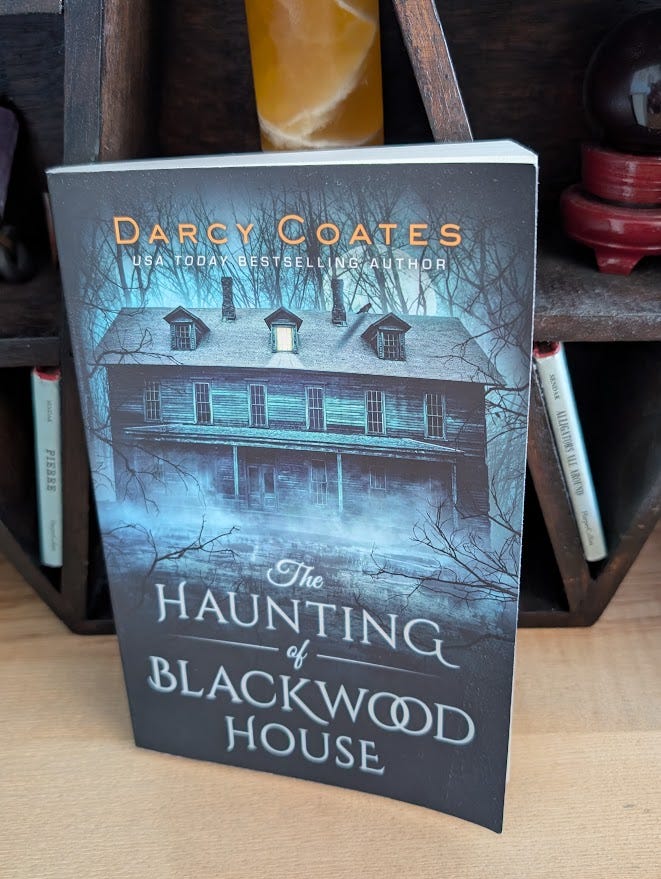
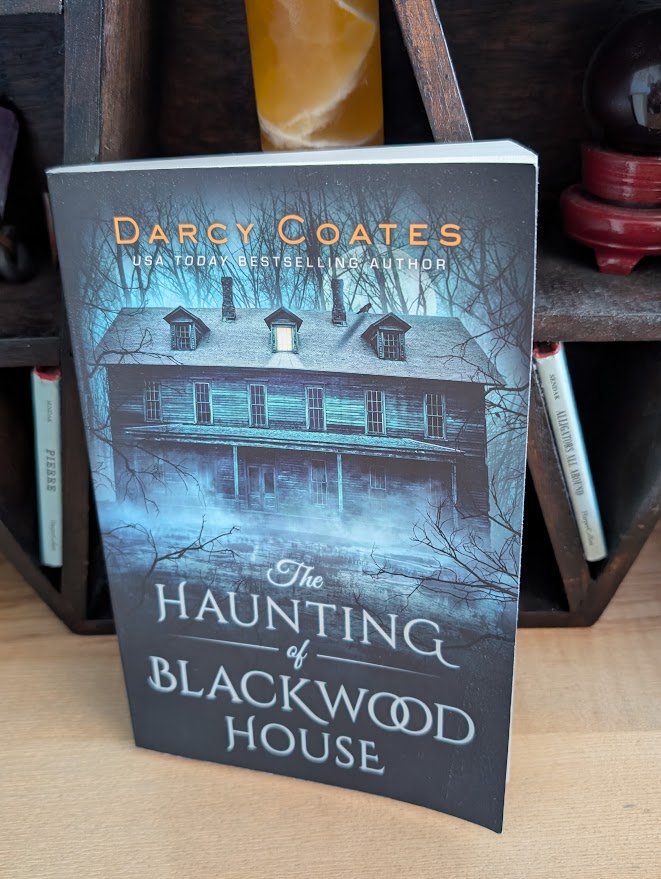
Let’s talk about The Haunting of Blackwood House by Darcy Coates.

This book is popcorn reading, light and fun and undemanding. The main character, Mara, was raised by avid spiritualists and turned her back on it all the second she was old enough to live on her own. Of course she’ll land in a truly haunted house, forced to reassess her skepticism and realize her parents were onto something after all.

Her only other defining features are being stubborn and hating vegetables.

Her boyfriend Neil’s defining features are being ridiculously nice and cute. His only flaw is being kinda religious and believing maybe ghosts might be a little bit real.

They’re pleasant to read about but fairly forgettable. Everyone in the book is pretty much that. So is the plot, really. Straightforward, no real surprises.

The actual haunted house and its various ghosts, though, are awesome. I’m guessing the vivid and fascinating ghosts are the reason Darcy Coates takes up half a shelf at Barnes & Noble. We spend a lot of time learning about these ghosts and watching them haunt Blackwood House, endlessly repeating their most traumatic moments. We learn a bit about their pre-ghost lives and personalities, which are much more varied and interesting than Neil’s and Mara’s.

Subscribe now

And in this book, the ghosts can actually hurt you. At least one of these ghosts has an agenda, one beyond just driving people out of the house or scaring them to death, and that agenda powers some pretty terrifying violence. I liked this aspect a lot. I love a good haunted house story but they can feel a bit tame and silly once you realize the ghosts can’t do much besides bang around and make life inconvenient for the living. Sure, I wouldn’t want to live with a ghost that constantly hid my car keys or put spooky graffiti on my walls, but it’s more creepy than terrifying. These ghosts are a lot more powerful than that. They can manipulate your emotions and, when they really want to, literally push you around. This raises the stakes for Mara as she tries to cleanse her house of horrors and it leads to some genuinely deadly moments. I enjoyed that immensely.

This book is great for what it is. It’ll provide chills and thrills on a stormy night or help you while away the hours on a long trip without being too demanding, and it has just the right amount of blood and danger. The characters are easy and likeable, the action suitably suspenseful, and in the end the world is put right again. If there is such a thing, it’s kind of a cozy horror novel.

I’m a sucker for a good haunted house and if you are, too, this is a solid choice. It’s great for some cozy fall reading this spooky season. Also, if you read a lot of Darcy Coates, tell me if they’re all like this or if she’s also famous for something more?

As always, you can follow us here or on Substack for free. The first ten paid Substack subscribers can choose a book for us to review.

Home Movies

We had so much fun last week writing about hauntings in our home states, Trex and I decided to continue the theme. This time we bring you horror movies set in both Maryland and New Mexico, with minor detours to Texas (where Trex spent several years before Maryland) and Utah (where I lived for frickin’ decades before New Mexico). I’m gonna be up front, though. If this were a contest, Trex would win. Maryland and Texas both have impressive lists of classic horror to their names, while New Mexico and Utah really don’t. Still, I’m gonna work with what I’ve got.

Let’s start with Maryland, since this state is the obvious winner. Not that it’s a contest, but Maryland wins. First, it gave us The Exorcist, one of the all time classics of horror. If you somehow haven’t seen The Exorcist, or read the book it’s inspired by, or listened to any podcasts talking about it, the movie is about an exorcism. I grew up during the Satanic Panic and distinctly remember my parents gossiping on occasion about various teens being attacked by Satan and such, so I used to be terrified of possession and demonic horror. The first time I “watched” this movie at a friend’s house, my eyes were closed maybe 70% of the time. As I got older and my terror turned into fascination, the movie still held up. Even decades later, this movie evokes a deep atmosphere of dread that’s hard to beat.

As if that classic wasn’t enough, Maryland also brought us The Blair Witch Project, one of the classic “found footage” films. In a fun Utah connection, this Maryland-set movie first premiered at Utah’s Sundance Festival. When the movie first premiered, all the promos were still pretending this was a documentary. I lived in Utah at the time but I had no money and no car so I did not see the premier. I saw it much later at a local theater like everybody else. By that time, word was out that the Blair Witch was fiction and the “missing” actors were alive and well and giving interviews about the film.

And last but not least, Maryland gets a bonus point because famous cannibal Hannibal Lecter (from Silence of the Lambs and such) was part of Baltimore’s elite before he was caught and imprisoned (also in Baltimore) for killing and eating people.

New Mexico, meanwhile, is not the home of any horror classics. It is the home of remakes of horror classics. (And of Breaking Bad, which isn’t really horror even though it features a lot of murders.) New Mexico brings us Let Me In, the American remake of Sweden’s Let the Right One In. Both of them are vampire/coming of age films and they’re really really similar. Let Me In is set in 1980s Los Alamos, though that has pretty much nothing to do with anything. I’ve seen both the original and the remake and they both have their merits. Let Me In is a Hammer Film and has their signature stylish, almost poetic moments of horror. As far as the plot goes, both movies end exactly the same, but the New Mexico remake is shot better and has more drama and poignancy.

New Mexico also brings us the remake of Wes Craven’s classic The Hills Have Eyes, and with it a complaint I just can’t shake. Both movies are largely about a family lost in the desert being stalked by murderous mutants. Craven’s original was set in California and Alexandre Aja, the remake’s director, moved it to New Mexico so he could change the film’s backstory. In the remake, the villainous mutants are the result of nuclear testing and part of the film’s action takes place in one of those creepy fake towns full of mannequins built to test the damage done by bombs. It’s a good idea and adds some interest and some cool creepy visuals to Aja’s remake. My complaint is that Aja, like a lot of people, seems to have New Mexico and Nevada confused. I get it, they’re both mostly desert and they’re both famous for aliens and nuclear weapons. New Mexico is famous for inventing the atom bomb and the first test was here, but most of the above ground testing was done in Nevada, so they should have the murderous mutants. New Mexico has a bad enough reputation already. We don’t need mutants on top of it.

Okay, enough of New Mexico. It has no honorable mentions. Instead I’ll move on to Utah, where Ari Aster’s Hereditary is set. I saw Hereditary but completely forgot it was set in Utah. This one is partly a disturbing look at grief and death, and partly a disturbing look at ceremonial magic and Victorian-style occult societies. It’s a great film, a modern classic. One point for me! But it’s not a contest.

If it were a contest, Trex would reach back to her time in Texas and fire back with The Texas Chainsaw Massacre. It’s even got Texas in the name so you can’t forget where the massacre is set. Another classic, this time featuring young people finding a seemingly deserted farmhouse only to be chased and killed by the creepy chainsaw-wielding family within. One of the first big slasher films, the Chainsaw Massacre has a slew of sequels and remakes with Texas in their titles.

I’m really glad this isn’t a contest because my desolate little western states just don’t have a comeback to that one. There might not be any states as terrifying as Texas and Maryland. Trex is clearly a badass afraid of nothing to live in such places. I’ll stay out here with the sand and the nuclear mutants, thank you very much.

As always, you can follow and subscribe here or on Substack for free