How to Survive Camping: a Review

What’s the book? How to Survive Camping: the Man with No Shadow by Bonnie Quinn

What kind of dark is it? Ghosts and goblins and moderate gore

How good is it? 7/10 faerie tricks
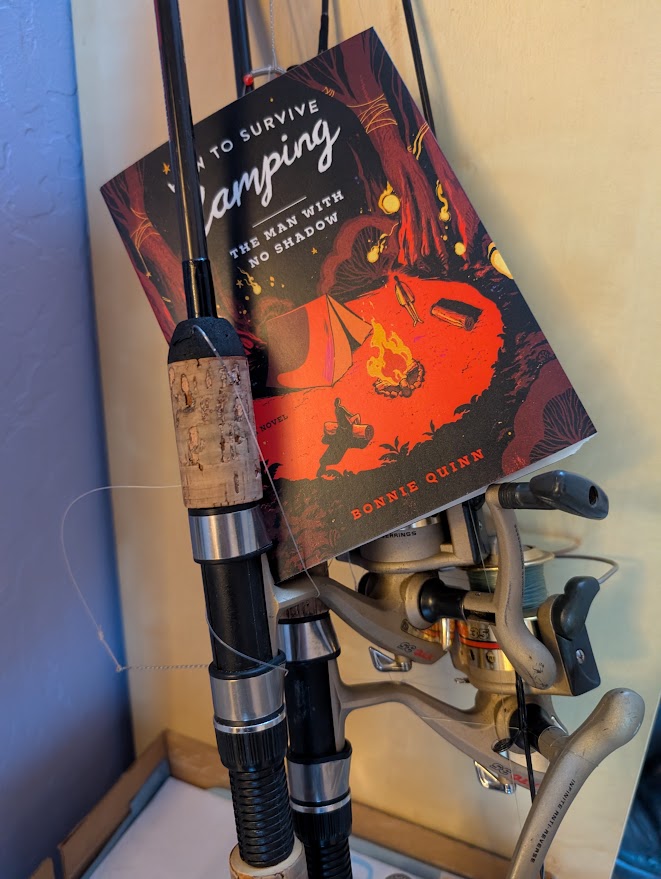
It starts with a list of rules, which had me worried. The list was funny, a good mix of sound camping tips (how to space your tents and avoid flooding) and rules for avoiding death at the hands of mysterious beings (apparently the children with no wagon are not to be trusted and the man with no shadow is bad news). The list promised a fun romp in the haunted woods but it also felt a bit gimmicky, so I worried that haunted romp would be thin on character development and lazily plotted, perhaps. I was delighted to find I was mostly wrong. This wasn’t a deep character study or anything but the story that grows from this goofy set of rules is pretty satisfying.

The woman who wrote the rules is Kate, who inherited this campground when her parents died. She was pretty young when they were taken from her, not quite finished with college, so she had a rough start running the place but it’s been several years now and she’s started to really get the hang of the job by now. Or so she thinks.

This piece of land has been in Kate’s family for a few generations now, which is a source of pride and stability but also the source of most of Kate’s problems. Her family has owned the land so long that it’s become Old with a capital ‘O’. The kind that attracts beings of myth and folklore like fairies and shulikun, along with beings that have power but no stories to their names. At least none Kate’s found in the many books on folklore that line her office walls. Kate’s campground is a huge source of income for the nearby town but it’s also understood that Kate’s job is to keep all those beings contained and controlled. Keep the town safe, keep the land in the family. A simple mandate but not always easy to carry out. Lately things have gotten extra difficult. Some of her land’s inhabitants have gotten restless and one in particular, the Man with no Shadow, seems to want a change of leadership.

I like Kate. She doesn’t seem like a very nice person, truth be told, but she’s tough and serious about her duties both mundane and supernatural. I found myself rooting for her as she fought both the Man with No Shadow and a whole lot of her ungrateful neighbors. I started to see her as tough but fair, willing to take each eldritch being on its own merits; if you’re a being (human or supernatural) willing to deal fairly with Kate, she’s willing to deal fairly with you. I found it refreshing to follow someone trying to really wrestle with and live along side the forces of darkness instead of the usual fleeing or fighting we usually get. Though Kate’s not afraid to kick ass when she needs to. The story was a good balance for me between tough kickassery and vulnerable humanity.

It’s also a perfect book for October, the spooky season of ghosts and goblins and darkening skies, because it’s all about learning to live with the things that go bump in the night. Quinn is a newer author and this is the first in what is now a growing series of stories about Kate and her campground. I plan to eventually pick up further installments of Kate’s adventures and if you want a cozy bit of autumn horror this would be a good choice.
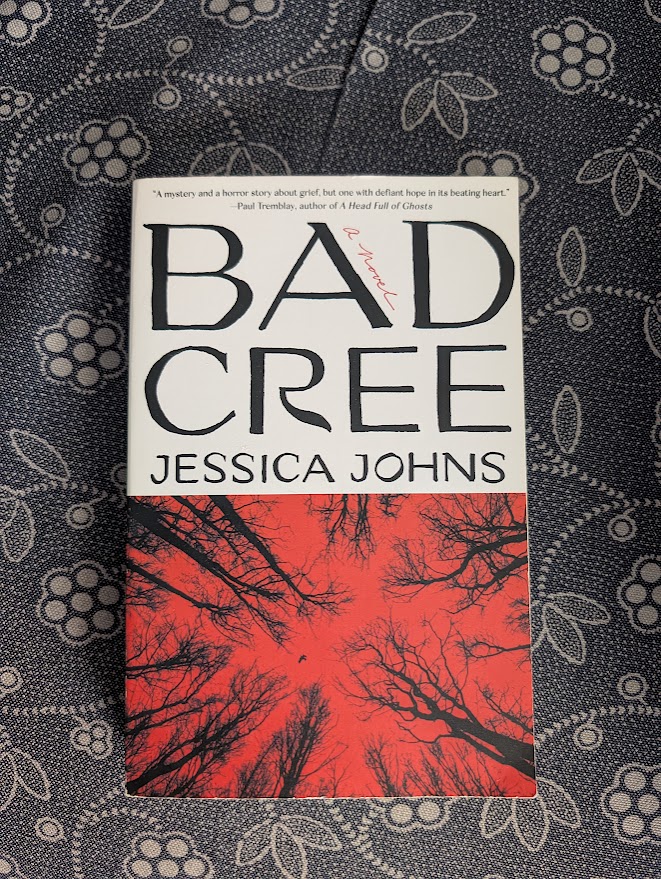
Bad Cree: a Review

This review first appeared on our Substack in 2025. The book Trex reviewed “last week” will actually be reprinted here next week.

Trex reviewed a book about grief last week, which reminded me that I also have a couple books about grief waiting to be reviewed. By coincidence, we’d converged on one of the classic themes in horror. To that end . . .

Let’s talk about Bad Cree by Jessica Johns.

There’s a monster in this one, sure, and there are blood and mystery and reality-bending events, but Bad Cree much more about grief and community than monsters and mayhem. Mackenzie has been hiding out in the big city, not dealing with the death of her grandmother (expected) and her sister Sabrina (decidedly unexpected). She feels guilty about leaving everyone to their own grief, never calling or visiting, but she’s just not ready to deal with it all. Then Sabrina starts to haunt her dreams. Sure, the first anniversary of her death is approaching, but these dreams feel like more than just an upsurge of grief as the anniversary nears. These dreams feel urgent and terrifying. They also might be following her into waking life.

Tired and increasingly desperate, Mackenzie finally breaks down and calls her Auntie for advice. She even agrees to fly home for a few days to consult her family about this dream problem.

Most of the story unfolds on this visit home. Her family–sister, mom, cousins, aunties–circle around Mackenzie to help and comfort her. Both their deep grief and their tight bonds are clear from the beginning. What becomes equally clear and compelling is what’s missing for all of them. As tight as they are, as focused on community and heritage as they all are, there’s still so much that’s just not there. While rarely talking about it directly, this story shows how much has been taken from the Cree and how much they struggle to hold on to what’s left of their culture.

You see, Mackenzie’s not the only one with powerful, maybe magical dreams. Most of the women in her family seem to have them but no one ever talks about them. As Mackenzie figures out that her dreams are showing her a wheetigo, a ravenous wintery monster that feeds on greed and grief, her family scrambles to find any scraps of lore their community still has about this creature. I can’t help but think that a couple hundred years ago, in a former time when her ancestors and their culture were thriving, those dreams wouldn’t have been a secret and more people would know what to do about a wheetigo. Mackenzie’s personal grief over her grandma and sister are magnified by this greater loss of culture and community and history, and this understanding is all the more powerful for its subtlety.

As a study in grief, this is an excellent story. Mackenzie’s dreams are bloody and terrifying but they lead her and her family to an important and ultimately healing showdown with the wheetigo. Nothing can erase the larger loss and pain her community has faced (and continues to face) but Mackenzie reconnects with her family and this crisis gets everyone to open up about their dreams and maybe rekindle a tiny part of their culture as they share their spiritual connection more freely.

As a horror tale, Bad Cree is a bit slow and repetitive, spending a lot of time on family scenes that do highlight the larger themes but sometimes bog down the story. Some of it feels like padding as Johns struggles to turn a great short story into a less great novel. The novel starts well, jumping right into Mackenzie’s terrifying dream world, and it ends pretty well as she and her family face the wheetigo, but the middle drags at times and if you’re looking for a tight and exciting read, this won’t satisfy. Still, there’s an emotional resonance here that has stuck with me. If you don’t mind a slower read and like a more emotional aspect to your stories, this is the book for you.