This review first appeared on our Substack in 2025. The book Trex reviewed “last week” will actually be reprinted here next week.
Trex reviewed a book about grief last week, which reminded me that I also have a couple books about grief waiting to be reviewed. By coincidence, we’d converged on one of the classic themes in horror. To that end . . .
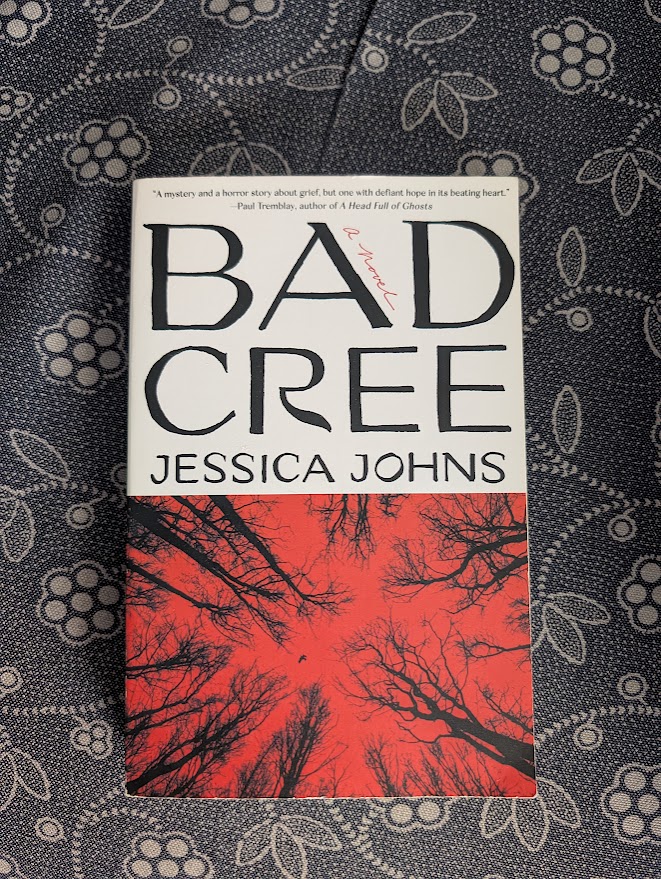
Let’s talk about Bad Cree by Jessica Johns.
There’s a monster in this one, sure, and there are blood and mystery and reality-bending events, but Bad Cree much more about grief and community than monsters and mayhem. Mackenzie has been hiding out in the big city, not dealing with the death of her grandmother (expected) and her sister Sabrina (decidedly unexpected). She feels guilty about leaving everyone to their own grief, never calling or visiting, but she’s just not ready to deal with it all. Then Sabrina starts to haunt her dreams. Sure, the first anniversary of her death is approaching, but these dreams feel like more than just an upsurge of grief as the anniversary nears. These dreams feel urgent and terrifying. They also might be following her into waking life.
Tired and increasingly desperate, Mackenzie finally breaks down and calls her Auntie for advice. She even agrees to fly home for a few days to consult her family about this dream problem.
Most of the story unfolds on this visit home. Her family–sister, mom, cousins, aunties–circle around Mackenzie to help and comfort her. Both their deep grief and their tight bonds are clear from the beginning. What becomes equally clear and compelling is what’s missing for all of them. As tight as they are, as focused on community and heritage as they all are, there’s still so much that’s just not there. While rarely talking about it directly, this story shows how much has been taken from the Cree and how much they struggle to hold on to what’s left of their culture.
You see, Mackenzie’s not the only one with powerful, maybe magical dreams. Most of the women in her family seem to have them but no one ever talks about them. As Mackenzie figures out that her dreams are showing her a wheetigo, a ravenous wintery monster that feeds on greed and grief, her family scrambles to find any scraps of lore their community still has about this creature. I can’t help but think that a couple hundred years ago, in a former time when her ancestors and their culture were thriving, those dreams wouldn’t have been a secret and more people would know what to do about a wheetigo. Mackenzie’s personal grief over her grandma and sister are magnified by this greater loss of culture and community and history, and this understanding is all the more powerful for its subtlety.
As a study in grief, this is an excellent story. Mackenzie’s dreams are bloody and terrifying but they lead her and her family to an important and ultimately healing showdown with the wheetigo. Nothing can erase the larger loss and pain her community has faced (and continues to face) but Mackenzie reconnects with her family and this crisis gets everyone to open up about their dreams and maybe rekindle a tiny part of their culture as they share their spiritual connection more freely.
As a horror tale, Bad Cree is a bit slow and repetitive, spending a lot of time on family scenes that do highlight the larger themes but sometimes bog down the story. Some of it feels like padding as Johns struggles to turn a great short story into a less great novel. The novel starts well, jumping right into Mackenzie’s terrifying dream world, and it ends pretty well as she and her family face the wheetigo, but the middle drags at times and if you’re looking for a tight and exciting read, this won’t satisfy. Still, there’s an emotional resonance here that has stuck with me. If you don’t mind a slower read and like a more emotional aspect to your stories, this is the book for you.