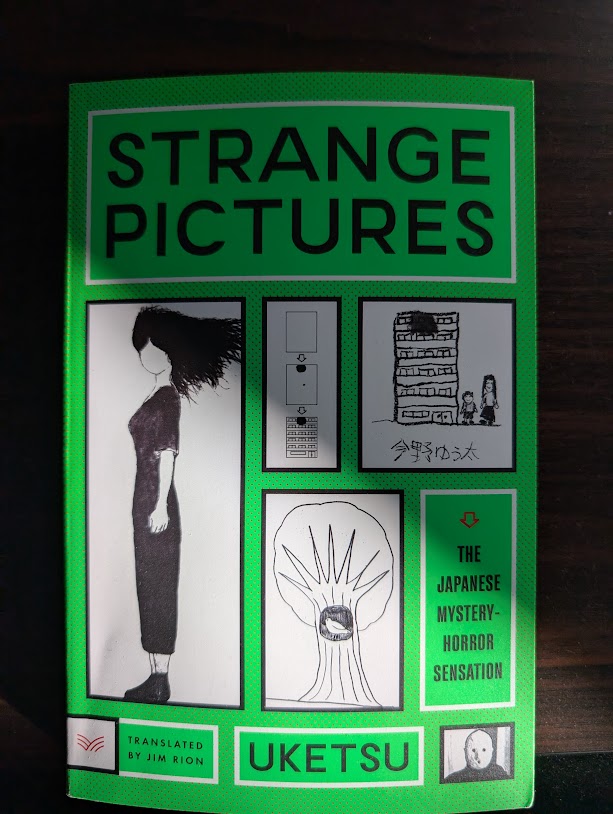
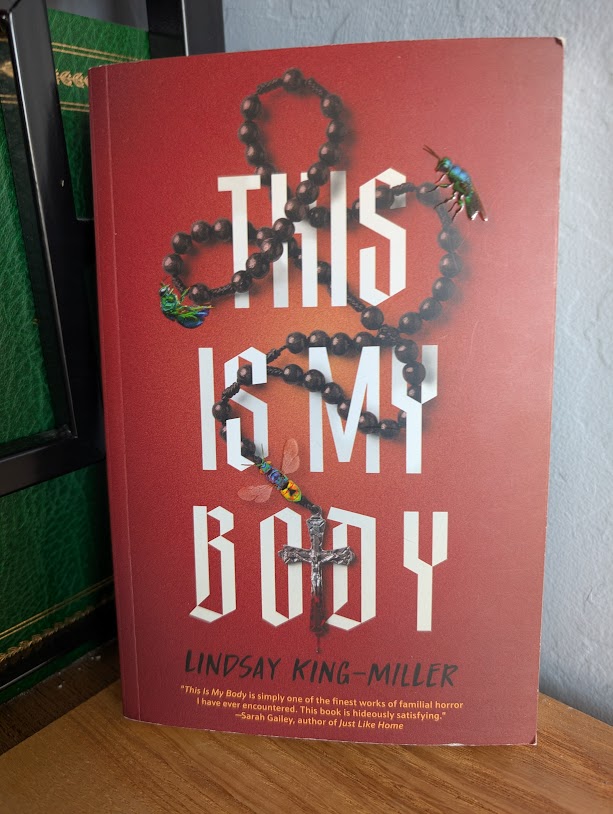
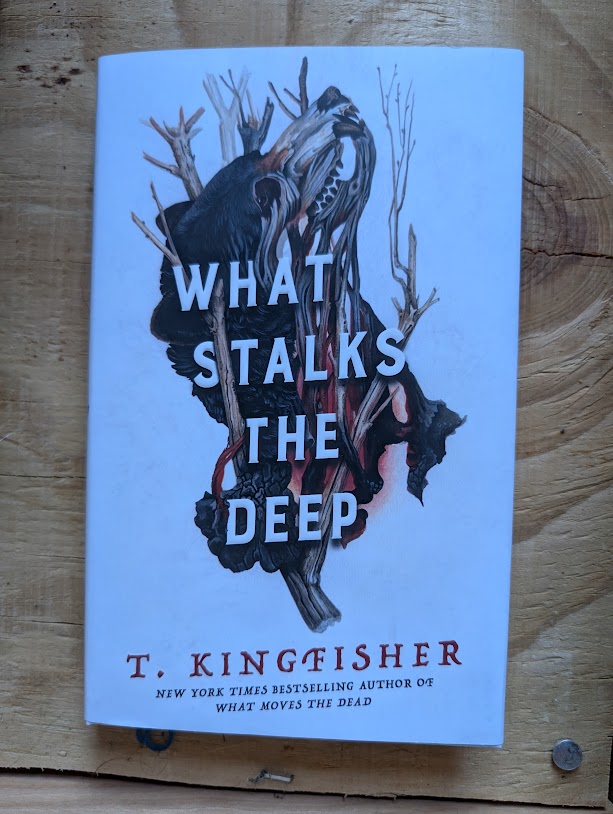
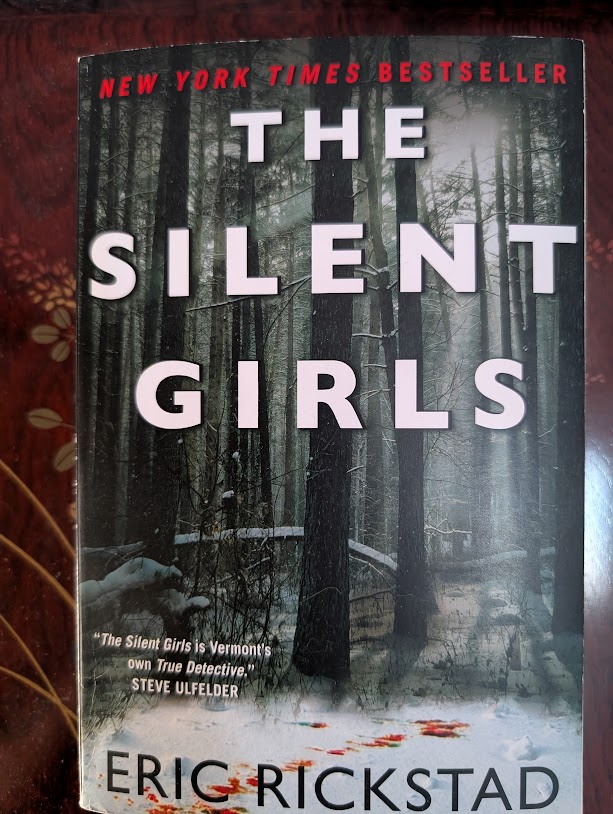
I got Strange Pictures in Tucson, at Antigone Books. It’s mostly a feminist/social justice bookstore, which means its horror section is tiny (even tinier than it is in most bookstores) but also very dedicated to minority authors, which made for interesting browsing.
Anyway, I picked up Strange Pictures by Uketsu mostly because the author’s name was Japanese. My family lived in Japan when I was in high school and even though I don’t speak the language, I’ve read a lot of Japanese novels in translation. Mostly literary stuff but also authors like Yoko Ogawa and Ryu Murakami who write horror and speculative fiction.
Since I don’t speak Japanese, I didn’t realize Uketsu’s mysteries were famous on YouTube until after I bought the book. The cover calls him a “mystery-horror sensation” and he may do horror tales on his channel but Strange Pictures is pretty much straight mysteries. There are several shortish mysteries, each one with its own solution, and they all nest together to solve a larger mystery.
This book was a quick read and very focused on logical puzzles and following clues. It had a very well done “Sherlock Holmes” vibe, where clues are clearly laid out and everything fits neatly together by the end. There’s not much exploration into psychology or deep emotions but the characters are pleasant and usually relatable. There are definitely some dramatic moments and a few surprises. Also, the “strange pictures” of the title are actually pictures that are printed in the book so you can try to solve the puzzles yourself if you want.
On the one hand, this book has almost none of the weirdness and complexity that I look for in a darker book so it’s not gonna stick with me the way my favorites do. On the other hand, it’s so logical and neatly resolved that I was quite charmed and satisfied with the experience of reading it. I fully plan to find the sequel, Strange Houses, at some point. There are still several murders in this book so it might sound odd to say, but I think of this as light reading.
Embrace the darkness and read more books. As always, follow us here or on Substack.
Let’s talk about This is my Body by Lindsay King-Miller. More specifically, let’s talk about how much I loved it because man, this book got to me. It’s got a possessed kid who levitates and eats the local birds and squirrels, but that’s not what haunts me. What haunts me is how relatable all the religious guilt and family dysfunction is.
Books about generational trauma seem all the rage right now and most of them don’t really do it for me. The trauma is so big and abstract, it’s hard to really connect to it on a personal level. This book, though, is a look at that trauma up close. Ridiculous amounts of repressed guilt and anxiety. Imprenetrable emotional armor and narcissism. Everybody blaming everyone else for their pain and everybody being at least a little bit at fault. If you pull back far enough you can see the epically oppressive institutions pouring pain down through the generations, but on the daily human level it usually doesn’t feel sweeping. It feels like a big painful mess that no one quite knows how to deal with.
So. Back to the possessed kid. Or actually, we should start with the possessed kid’s mom, Brigid. Brigid has so much Catholic guilt. Like, as much Catholic guilt as you can fit into one person. When she was little, she and her mom (her single mom who was never married to her dad) had to move in with Uncle Angus, a domineering priest who always kept the curtains closed and wouldn’t let her watch TV or read books that weren’t the Bible. This already sucked, but when Brigid fell in love in middle school, Angus got even worse. Mostly (entirely) because Brigid’s crush was her best friend, Alexandra. I’m pretty sure a straight crush would have still bothered Angus but this gay crush was soooooo much worse. Angus rained down the wrath of his god and Brigid’s mom was pretty much on his side. It was bad.
Eventually Brigid grew up, officially came out of the closet, opened an occult bookstore, and cut Angus and her mom completely out of her life. If only she could cut the secret guilt and shame out that easily. Still, she’s tried hard to keep all that from her daughter, Dylan. Dylan’s gonna grow up pampered and protected and connected to a mother who really sees and understands her. History will not repeat itself, dammit! (Honestly, this is what most of us strive for with our kids. Sad thing is, when we don’t repeat our parents’ mistakes we usually make new and different mistakes instead.)
And then Dylan gets possessed. At first we’re not sure that’s what’s happening. Dylan’s a middle schooler and they can act pretty weird, especially when they’re going through some stuff. Dylan’s fighting with her former best friend, Kai, and when she punches him and then later actually bites him she gets in big trouble with the school. Dylan doesn’t want to talk about it and Brigid is freaking out, wondering where she went wrong as a mother. And on top of all this drama, Brigid is trying to reconnect with that old school crush of hers, Alexandra, who’s even more awesome as an adult than she was in middle school. Connecting with Alexandra (Zandy for short) is good but the timing really sucks.
Especially when, right before their first date, Brigid discovers all the dead animals in Dylan’s closet. A few pages later we’ve all decided Dylan is definitely possessed. It’s bloody and there’s levitation involved. The only person Brigid knows who’s ever exorcised someone is her shitty Uncle Angus. In the absence of better ideas, she heads to his house in Denver to beg for his help.
This turns out to be a terrible idea. He’s just as awful as she remembers, only now he’s being all fake nice to Dylan, who is totally falling for it because she’s so delighted to suddenly have a grandpa. Brigid never told her why she didn’t talk to her family. Then Zandy calls; she googled Angus and found out he was actually defrocked in the 1980s for running a cable access show where he “exorcised” people on screen. Was the exorcism Brigid witnessed fake? But she saw it with her own eyes!
And things get even worse when Brigid finds an old journal her mother made before her suicide. It’s full of clear evidence that her mother never forgave her for being gay, but also full of news clippings of people who committed heinous crimes after being on Angus’s exorcism show.
It’s all just crazy and Brigid has no idea what to do now. If Angus can’t actually exorcise her daughter, who even can? She has to save her daughter somehow but Brigid almost feels possessed herself, filled with panic and shame and a growing desire to just smash Angus’s face in.
I’m not gonna tell you how it all ends. I’ll just say it gets worse and weirder before it gets better. This is a quick read full of drama and horror and I loved following all the mysterious little threads weaving together as the book progressed.
What I loved most, though, was how real and complex all the relationships felt. Angus is a hateable villain but we also get glimpses of where it all comes from. Brigid’s mom is incredibly frustrating and grossly unfair to her daughter but we also get glimpses into her own personal torture. She feels all too familiar to those of us who grew up in conservative religious families. Brigid and Dylan are sympathetic and relatable, while also being flawed and human.
I didn’t grow up Catholic but my background is close enough that this book was all sorts of familiar. I grew up during the Satanic Panic, around people who tried to “pray the gay away” and wouldn’t watch R-rated movies because they’d “drive the spirit away.” This book captures the spiderweb of complex emotions and relationships that culture tends to weave around you, while also being an exciting horror novel. If you like possession stories (which I do) and/or carry residual religious guilt (which I do) go read this book. Go read it right now.
Embrace the darkness and read more books. As always, follow us here or on Substack.
What Stalks the Deep is the third in T. Kingfisher’s “sworn soldier” series featuring Alex Easton. I highly recommend all three and they do relate to each other, but each of Alex’s adventures is complete in itself, so you don’t absolutely have to read the first two to enjoy this one. All you need to know going in is that Alex has been invited to America to help a friend, Doctor Denton, who was instrumental in defeating the mysterious evil Alex encountered in the first book. The way the invitation is worded, Alex is pretty sure Denton has encountered some new mysterious evil and Alex is not one to abandon a friend or shy away from battle. So off to America it is!
If you haven’t read any of these, “sworn soldier” is pretty much its own gender identity in Alex’s home country of Gallacia. Alex was born female but took on this new identity and pronouns (ka and kan) when ka became a career soldier. In Europe, this is generally accepted as “one of those quirky Gallacian things” and people are curious but not alarmed about it. Fellow soldiers tend to recognize one of their own breed in Alex. Americans, of course, know jack-all about this tiny European country so mostly Alex just poses as a man instead of trying to explain Gallacian language and culture. None of this is vital to any of the stories, I just find the whole thing (and Alex’s wry comments on Gallacia) interesting and amusing. I also think it’s a cool way to present the unique life experience and bond soldiers often have. Gender aside, it is its own thing, you know?
The real meat of this story is that Denton’s cousin has disappeared while exploring an abandoned mine his family owns, and there’s reason to think strange things are afoot. Finding out requires exploring the mine itself, and in the process Alex has to constantly remind themself (kanself? Kaself? I don’t speak Gallacian) that ka is a badass soldier who is absolutely not claustrophobic or scared of being deep underground. Nope. Nosiree, Alex isn’t scared one little bit and ka’ll die before ka’ll say otherwise. I love Alex.
As they explore the mine and nearby town, the friends do indeed find something mysterious and maybe evil. I don’t want to give anything away, but the “sworn soldier” series (and a lot of Kingfisher’s weird tales) generally lives in that muddy area between natural and supernatural and this book definitely lives in that area. Kingfisher takes a lot of inspiration from classic authors of weird tales, like Edgar Allan Poe and Arthur Machen, and this particular one draws inspiration from Lovecraft and his stories of ancient gods and buried mysteries. I enjoyed, as I usually do, the updated and creative spin she put on the classic theme.
I haven’t reviewed a Kingfisher book for you yet so you couldn’t possibly know this, but I love her work. I can always count on her for engaging characters and solid storytelling, and though she leans more toward haunting and fairytales than gore, she’s great at creating a spooky atmosphere and has a real knack for creative and disturbing imagery. I haven’t read a book of hers yet that I didn’t enjoy, and I find Alex Easton’s adventures especially delightful. Plus the cover art is awesome. I listened to the first two books on audio* but someday I’ll have to go buy physical copies because the artwork is just that good.
*I don’t listen to a lot of audiobooks but I recommend these if you’re into that sort of thing. All the books are written in first person as if Alex is telling us the story, and Avi Roque does a great job conveying Alex’s sense of humor and soldierly stoicism while preserving ka’s unique identity.
Until next time . . . as always, embrace the darkness and read more books.
Eric Rickstad’s The Silent Girls is the first in a trilogy, apparently. If I hadn’t figured that out already, the major cliffhanger at the end would have tipped me off. Thing is, by the time the cliffhanger happened I was a wee bit tired of this book so I’m not sure when or if I’ll find out the end of that new mystery.
This is one of those super gritty mysteries that keeps you guessing because everyone in it is definitely awful enough to murder someone. Even our hero, honestly. His defining features are his tragic backstory and the fact that he drives drunk a lot. Enough that I expected it to become a plot point somehow, with him swerving all over the snowy winter roads while fully loaded, but it turns out that drunk as Frank is in this book, it doesn’t affect much of anything.
But anyway, back to the tragic backstory. Once upon a time Frank was on the police force of his small Vermont town, probably with a good career ahead of him. Then his sister and her husband were brutally murdered, leaving a miraculously unhurt (but now orphaned) baby daughter. Frank quit the force and became a private detective, partly so he could focus on raising his niece and partly because of his guilt over the whole situation. When the killer arrived, Frank’s sister was at the house waiting for him to show up; he was late for the millionth time because he was busy having meaningless casual sex with some gal. To be clear, no one was expecting this killer to show up. Frank wasn’t neglecting his duty or intending to put anyone in danger, he was just being normal amounts of douchy and self-involved. Still, he feels incredibly guilty about it and now that his niece is off at college and the horrible killer is about to be paroled, it’s been on Frank’s mind more than usual.
None of that is the mystery. It’s very much going on in the background and it’s very important to Frank but the actual mystery is mostly unrelated–a local teen has gone missing and the cops are starting to worry that the disappearance is related to a handful of others over the last few years. This is a mystery novel so of course they’re connected, but the missing girls are from widely different areas and seem to have nothing in common. Frank and the town’s two detectives, Harland Grout and Sonja Test, have a devil of a time connecting the girls and figuring out who might want them dead.
I don’t want to give too much away but I will say this mystery deals heavily with teen pregnancy and the abortion debate. It doesn’t try to take a definitive stand, which I appreciate, it just touches on various sides of the issue as the mystery is unraveled. I enjoyed the complexity there and the mystery was kind of farfetched (as most mysteries are) but it was interesting and had some dramatic moments and exciting twists. It was exciting to watch these detectives connect the dots, and the mystery was unraveled slowly in a way I enjoyed.
None of the characters quite held together for me, though. Rickstad was quite descriptive and gave us plenty of hooks into their psyches but none of it felt quite coherent. Sometimes it felt like jumping from scene to scene without quite enough to connect them. Each scene might be dramatic and emotionally fraught, but they don’t quite build up into the compelling whole I was hoping for. This is especially true of Grout and Test–we’re given all these tantalizing little peeks into their personal lives but none of it really goes anywhere. Sonja Test, for example, has become a fanatical distance runner and it’s heavily implied there’s a backstory to this new compulsion. I was intrigued by this and hoping we’d find out what’s going on with her but we never do. These dropped threads were disappointing.
Sometimes I browse through reviews after I finish a book and I noticed someone complaining about editing. They were pointing out small annoyances like a person with makeup running down her face in one paragraph and then further down the page described as not wearing any makeup. I’d noticed some little things like that, too, and it got me thinking that lack of editing could explain most of my issues with this book. Take the same characters and mystery but tighten up a few places, expand others, have the detectives interact with each other more (they often seem to run on parallel tracks even though they’re on the same case) and the whole book might have felt more real and compelling.
It does seem like this was Rickstad’s first novel so it’s possible these rough edges are smoothed out in the sequels. And that cliffhanger is quite a doozy, relating heavily to that tragic backstory I talked about, so I might have to give the second book a shot sometime. Eventually.
This is a Trex review for Djeli Clark’s Ring Shout.
Although nonfiction about the Klan is full of horror enough, this book takes the existence of the real Klan and layers on the supernatural. What if some klansmen were literal monsters? Inhuman creatures with supernatural strength disguised as humans? Ring Shout tells the story of Maryse Boudreaux and her two deadly compatriots as they hunt and grapple with white-hooded monsters in 1915 Macon. They are watched over and aided by Nana Jean whose magic called them to her to fight evil. She brews magical water by channeling the energy of spiritual “shouts” through herself. Maryse wields an otherworldly sword that was forged by slaver chiefs who channeled their regret and anguish into its’ smoky blade. She is the champion chosen by three spirit “aunties” who Nana Jean doesn’t trust and calls “haints.” There is a new and powerful entity in Macon who has pushed into Maryse’s dreams – Butcher Clyde. His plan is to use the film “The Birth of a Nation” to create a portal for an even more powerful and destructive entity than himself to enter the world. There are a lot of supernatural and frankly freaky as hell things in this book. The author does some truly terrifying things with mouths and teeth. The pacing and action feel more fantasy but the body-horror and supernatural entities make this a decidedly creepy (in the best possible way) book.
As compelling and surprising as the supernatural elements are, just as rewarding were the historical and cultural details. Nana Jean is a Gullah woman and speaks in Gullah on the page. The history and significance of shouts is explained and revered as one of the key factors of the magic in the book. One of Maryse’s friends, Chef, was a Harlem Hellfighter in the war. Disguised as a man, she fought. Now she kills monsters with homemade bombs charged with Nana Jean’s blessed water. One setting of the book is a jook joint owned by Maryse’s love interest. It’s hard not to imagine a more formalized version of the jook from Sinners and this one also gets beset by monsters so I feel fine drawing that comparison and using the movie set in my imagination. On her journey to defeat Butcher Clyde and what hell he is trying to bring forth, Maryse seeks out The Night Doctors. They are terrifying beings based on the historical atrocities committed against enslaved peoples in the name of medicine. It’s not every day that a book teaches me so many things and does so while weaving it all together seamlessly.
Ring Shout is a skillfully written book. It’s entertaining and thought provoking at the same time. While transporting you to a different historical time and place, it also imagines a world where the oppressed have magical tools at their disposal to combat injustice. Not everyone, but some. But so does the enemy. In fact, one of the inciting incidents for everything going on in the book is the release of The Birth of a Nation. In actual history, that movie triggered a resurgence of the Klan. This is also so in the book but some of those human Klansmen also become monsters because of the racist, hateful power of the film. At the climax, Maryse must decide whether she wants to take that power for herself and avenge her people or reject Butcher Clyde’s proposal. Would the end justify the means? Would vengeance make anything better?
Ring Shout got national acclaim and it was well deserved. If you haven’t read it yet, change that. It’s short, action packed, compelling, and even though there were some spoilers in this review, the journey is more important than the destination with this one. Just because you know where it’s going doesn’t mean you won’t enjoy how it gets there.
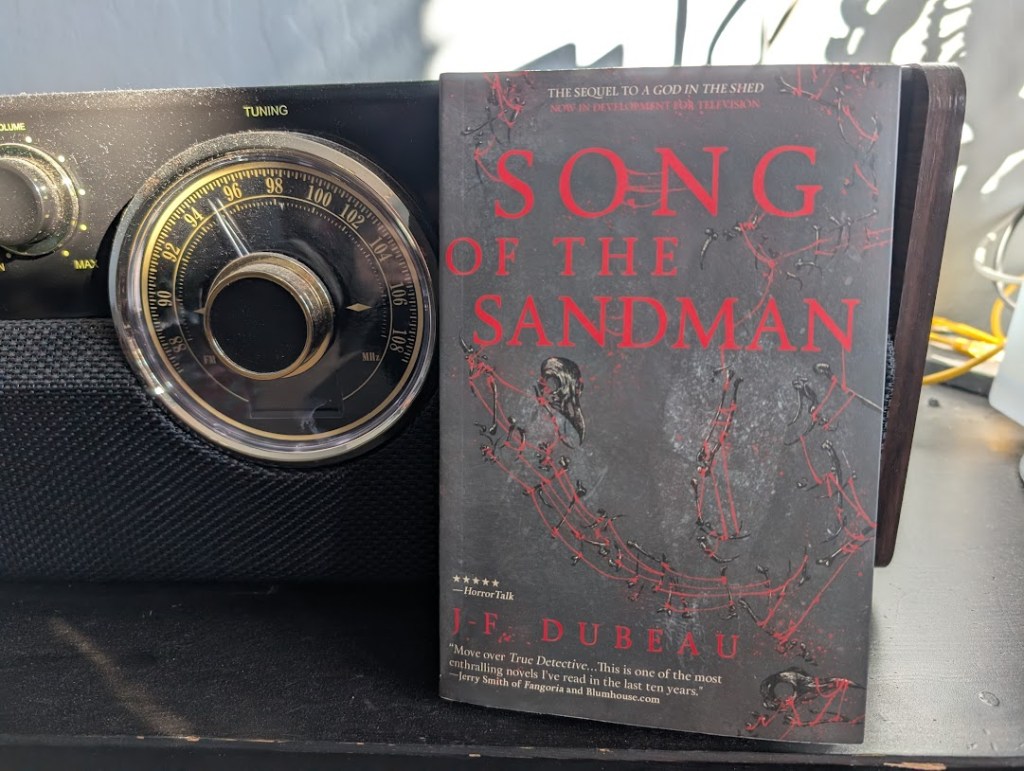
I finally read the sequel to A God in the Shed. That first book by J-F Dubeau brought us a gruesome yet hypnotic unnamed god and a whole slew of secret societies trying to bend that god to their own purposes. The book ended in a confrontation that killed several people and didn’t resolve much.
The second book, Song of the Sandman, picks the story up not long after that, following several different survivors and delving deeply into the lives of the Sandmen, the society/cult that now (just barely) has the god contained.
Venus Mackenzie, the girl who actually kept the god in her shed in the first book, has been wandering Montreal looking for someone who can help her find it and try to kill it. As she does that, she has to contend with her guilt and pain over her part in this mess while knowing she’s still intimately connected to the god.
Daniel, whose father succumbed to the god’s lure in the first book, has gone to find his mother and brother. He’s really not sure how he feels about them, seeing as how they’re the backbone of the Sandmen and seem to think that if they just learn to control the god they can turn it into a benevolent deity who grants all their wishes. Meanwhile, they have the god locked up in the basement. They’ve trained a girl to sing such perfect lullabies that she can lull the god to sleep for days at a time. Of course, every time it wakes up it starts killing every cult member it can get its hands on, so it seems they’re a long way from their dream of transforming the god of death and hate into something less murdery.
Oh, and the girl who sings? She’s a prisoner herself, kidnapped years ago and also kept in the basement pretty much any time she’s not singing. The Society of Sandmen seems pretty mean for people dedicated to bringing about a peaceful utopia. They don’t seem to know they’re the bad guys, but I’m pretty sure they’re the bad guys.
There are other threads to the story, equally intriguing and complicated, but I’ve given you a good taste of what you’re in store for. The book switches back and forth between characters, whose paths sometimes cross in surprising ways, as the books weaves toward a grand confrontation between several characters, the Sandmen, and the god everyone wants a piece of. As the second book in a series that will clearly continue, we reach the end with many unanswered questions, but the end is dramatic and satisfying, with a couple big twists that make us excited for the next chapter in this saga.
In fact, this book’s grand finale felt more fully set up and more fully satisfying than the first book’s finale. In spite of its sprawling transitional vibe (the second book of a trilogy is always the trickiest) it was pretty enjoyable. I especially enjoyed reading about Alice, the girl with the power to sing the god to sleep. Her story arc and her psychology are especially interesting as she wrestles with understanding she’s merely a tool for the cult leader while also exploring her power over and kinship with this god, her fellow prisoner. This series seems to be getting better with each book and I’m excited to read the next one.
As always, you can follow us here or on Substack. Embrace the darkness and read more books!
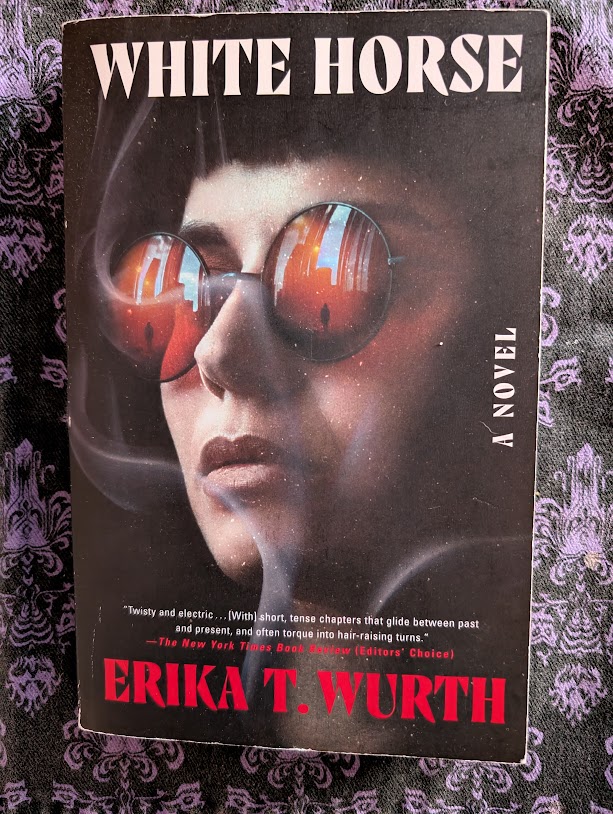
Today I present you White Horse by Erika T. Wurth. I got this at Op Cit in Santa Fe. Their website is sad and basic but in real life the store is a legit hoard of used books. Literal piles of books everywhere. I think I got this book in the crime section? Or mysteries? Their official horror section is tiny, as it is in most used book stores, so I browse other sections. This mystery promised “disturbing visions,” which sounded horror adjacent. The lady at the register said it was a great book. Then she paused and said “but it gets really dark. Are you okay with dark?” Yes, I’m okay with dark.
Kari James lives in Denver but she grew up in Idaho Springs, a tiny mountain town west of Denver. A bunch of her family still lives up there, including her cousin/best friend, Debby. Debby is pretty white but is fascinated by the native ancestry of her cousin’s side of the family, so when she finds an old bracelet with native symbols on it, she brings it to Kari. It belonged to Kari’s mother, you see . . .
Turns out the bracelet is cursed. Or blessed, maybe. It’s definitely connected to Kari’s ancestors and just having it around triggers powerful visions of Kari’s mother and sometimes other ancestors. Kari is not into this at all. Her mother disappeared when Kari was just two days old and Kari has always assumed she just couldn’t handle motherhood and ran off. After her mom ran off, her dad regularly drank himself into a stupor and eventually got into a car wreck that caused serious brain damage; Kari spent most of her young life helping nurse a father who could barely dress or feed himself and as far as Kari’s concerned, it’s all 100% her mom’s fault for bailing on them.
But these visions are showing something way more complicated than what Kari’s believed and whenever she goes to the real life locations her visions show, Kari finds another complicated piece of her mother’s history. While the visions are also terrifying, showing her mother bloody and screaming, being followed by a stinking monster with vicious claws, Kari makes time to follow them up, often with Debby at her side for moral support.
A lot of this book is about Kari’s personal growth, her coming to terms with her own past mistakes, her own emotional blocks and unresolved issues, her sometimes selfish and dependent relationship with Debby. Kari is an interesting character and an unreliable narrator. Sometimes we can see her problems way before she sees them in herself, and this is sometimes frustrating and sometimes fascinating, while allowing us to connect with Kari on a deep level as she wrestles her demons.
It also turns out to be a murder mystery. Pretty early on, Kari realizes her mom probably didn’t just run off to party or whatever, but it’s not clear what actually happened to her. It turns out Kari’s mom was heavily involved with the American Indian Movement, which means the FBI might have been out to get her. But the movement also had some dangerous people on the inside, so maybe one of them did something to her. Then, on top of these suspicions, Kari realizes her own grandfather was not such a good guy. Both Kari’s visions and her brief encounters with the man make him a suspect, too.
Both the visions and the real life mystery come together in dramatic fashion at the book’s climax. Kari’s final showdown is a blend of fantasy and reality as she faces both her mom’s killer and the demon of her visions at the same time. It might be a bit over the top with its technicolor dream sequences but it was also pretty gripping.
This was a pretty serious look at the way generational trauma and larger political issues can play out on the messy individual level, especially for indigenous women. I think it does a good job and represents a point of view that is really pushing to be heard right now. I’m not sure when I’ll be posting this review but it turns out I’m writing it on Columbus Day/ Indigenous People’s Day.* Seems like an especially good day to be thinking about a book like this. Though it might not be technically horror this book is definitely dark, and it’s a good one to read if you’re looking for alternate perspectives and dark books by indigenous authors.
*Turns out it took me months to post this, as you can see. I write reviews as I read but I don’t post them in any particular order.
As always, you can follow us here or on Substack. Embrace the darkness and read more books.
According to Wikipedia, Mary Roberts Rinehart was the American Agatha Christie. She certainly didn’t achieve Christie’s heights of fame but then again, who has? Agatha Christie famously disappeared for a couple of weeks in 1926, adding immensely to her mystique as a mystery writer. Rinehart did nothing so dramatic, but she was almost shot and stabbed by her longtime chef in 1947 and that same year went public about her battle with breast cancer, which was a pretty bold move for the times. She was also a trained nurse and a war correspondent on the front lines of World War I. She seems worth remembering for all that, if not for the long list of books she wrote. Her life sounds terrifying and it seems like she was a badass.
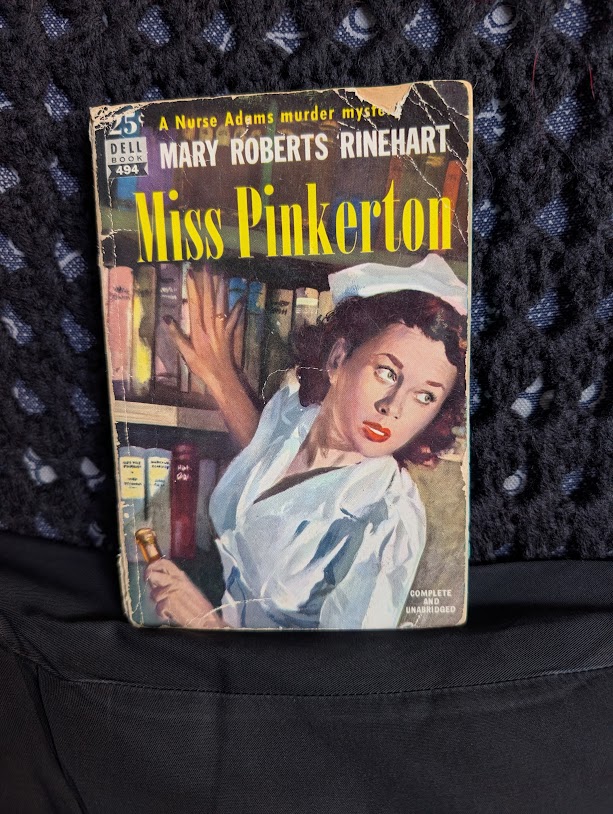
Many of her books are available on Project Gutenberg but it doesn’t look like Miss Pinkerton is among them. It’s actually the second (maybe third?) in a series of four books following Hilda Adams, professional nurse and secret assistant to the police. I picked this up in a used bookstore and though Miss Adams keeps referring to former cases I wasn’t sure whether that was referring to actual previous books or just a plot device. Miss Pinkerton (also called The Double Alibi) works as a standalone book but it’s neat to know there are really more stories about her.
Anyhow, it’s 1932 and Hilda Adams is a home care nurse. The police, especially Inspector Patton, sometimes arrange for her to snoop around and find clues while she’s nursing at at a suspect’s home, and this is what brings her to the elderly Miss Juliet Mitchell’s stately home. Her good for nothing nephew has just accidentally killed himself while cleaning his pistol. Or maybe he killed himself. Or maybe he was murdered and it was made to look like an accident or a suicide. Nurse Adams is helping Patton figure out what happened while she nurses Miss Juliet.
What follows is a guessing game of motives and opportunity. The elderly servants are hiding something, but what? Miss Juliet is hiding something, too. So is Paula, the dead nephew’s girlfriend. She’s sniffing around awfully hard for information. And what about Miss Juliet’s doctor, hoping Miss Juliet will leave him money in her will? And the family lawyer in charge of that will? What really happened is anybody’s guess as our heroine sneaks around looking for clues and talking to suspects, all while actually nursing Miss Juliet and secretly meeting with Inspector Patton to report.
It’s pulpy and superficial but it’s a fun mystery and Nurse Adams is pretty plucky and independent for the 1930s. It’s also fun to read mysteries from earlier eras where so many people don’t have phones or cars. It’s a whole different feel, you know? Also, it was a little weird to realize that Nurse Adams’s medical kit has reusable glass vials of pills and a hypodermic needle she just washes and reuses forever. Of course she does, the 1930s weren’t full of single use gloves and disposable needles. But that’s what I love about reading old stuff–I always find little tidbits I’d never considered.
Anyway, Rinehart was cool and probably worth trying if you like old-timey stuff. I don’t see the Miss Pinkerton series for free but Project Gutenberg has other mysteries she wrote, plus some of her non-fiction writing. Or you could cruise used book stores for pulp novels that haven’t yet crumbled to dust. You might get lucky and find the sequel, The Haunted Lady. But I’m hoping to find it first.
As always, you can follow us here or on Substack; embrace the darkness and read more books.
Sometimes I read a book that inspires thoughts and feelings, but not enough thoughts and feelings to inspire a full review. (Often the book just isn’t dark in the way I was hoping it would be.) Even the way I write, with lots of asides about where I bought the book and what random thoughts I had while reading, there’s just not enough for a coherent thousand words or so. When this happens, I save them up and throw together some mini-reviews. Let’s talk about three of these books:
This didn’t merit a whole review because it’s not really about ghosts. The spooky font and haunting line drawing on the cover promised me ghosts galore, so I was bitterly disappointed to find nearly six hundred pages and almost no ghosts at all. This is about 5% ghosts and lurid tales of Denver hijinks, 95% very detailed history of the Capitol Hill section of Denver focusing largely on architecture. I love history included with my ghosts stories, especially when that history involves colorful locals and either criminals or disasters. I like architecture and I’ve actually spent a few hours looking at cool buildings in the area this book is about, but this is way more detail than I ever wanted.
I did learn a handful of interesting things, though. I learned that Denver used radium tailings in some of their roadbeds, which made them radioactive enough to require cleanup efforts in the 1990s. I learned that 1920s Denver was kind of run by the Ku Klux Klan. I learned that during the Great Depression, movie theaters used to raffle off groceries. (That’s much more wholesome than the radium roads and the Klan thing.) There are a couple strange stories of murder and a couple of interesting ghost stories, but this book felt like a bait and switch. They lured me in with the promise of ghosts and then made me learn about city planning.
Funny enough, I grabbed this book in Denver’s Capitol Hill area. I’m pretty sure I got it at Kilgore Books, a few blocks down from the fittingly named Capitol Hill books, where I got the ghost book with no ghosts in it. I was pressed for time on this book-finding trip so I grabbed several books based on hunches and cool titles, and this was one of them.
Turns out Reprisal is trying to show us the complexities of race in the Jim Crow south. It was written in 1950 by a rich white dude from Savannah, Georgia so . . . he nails it, obviously. Deep and rich understanding of the grievances and injustices that led to the Civil Rights movement soon to gain momentum and sweep through the south.
Just kidding. He doesn’t nail it at all. It’s awkward and unsatisfying to read. The center of the story is Nathan, whose wife was lynched along with three friends. Several of the men involved were eventually brought to trial only to be acquitted by a jury of their white small town peers. When Nathan hears of the acquittal, he returns to Georgia to take justice into his own hands. This part is interesting and Nathan is a sympathetic character. Unfortunately, our author spends most of the novel following various characters who aren’t Nathan, trying to present a wide range of views on the lynching in particular and race in general. (Of course, most of these characters are white.)
There are so many characters that none of them are particularly deeply drawn and following them all bogs down the story’s pace while not saying anything particularly enlightening about race or segregation. In the story’s first few pages, a reporter wants to cover the trial and its aftermath and his editor warns him that “if you’re going to tackle the race problem–which has been hammered almost to death lately–try to write about the negroes as people, will you? Not symbols of suffering humanity or shuffling clowns. If you can make ‘em people, with fairly coherent thoughts and reactions and emotions, you’ll have done something no other feature writer has done yet . . .” This feels like the author’s mission statement and honestly, I’m not sure he succeeded. Maybe by 1950 standards . . . .
To be fair, I don’t know what book from the pre-Civil Rights era south would meet a modern reader’s standards. It does seem like Gordon was trying to fight racism in some way with his book, which is more than most authors were doing. This book kinda sucked on both a technical and a moral level but I found the attempt weirdly interesting to think about.
I picked this up at a used book shop purely because I wanted to try out Louis L’amour. I was booked to stay at the historic Strater Hotel for a weekend and Louis L’amour apparently stayed and wrote there often, preferring room 222. There’s a little brass plaque on the door now commemorating him. I thought it would cool to read L’amour in the hotel where he stayed. For the record, it was cool and this is a good book. It’s not my usual dark vibe, though, so an entire post on this fun L’amour book I read for goofy reasons felt like too much.
This isn’t one of L’amour’s most famous books, it’s just the one I happened to find the day I went looking. This one is set in the 1960s (and also written in the 1960s), following a writer of Westerns, Dan Sheridan, as he researches an old mystery and ends up in deep trouble. He visits the remote ranch of Colin Wells for research and immediately starts to realize Wells means trouble. Stuck in the Arizona wilderness, miles from help, Sheridan looks for a way to escape while trying desperately to figure out why Wells would want him dead at all.
It’s a tight mystery with exciting action and interesting wilderness survival scenes. L’amour is more famous for writing what his character Sheridan writes, historical frontier fiction, but if all his books are as tense and tightly written as this I can understand his fame. Used bookshops here in the southwest are usually well stocked with L’amour so I’ll probably grab more eventually. Maybe he’ll show up in the next Stubs post I put up. Who knows?
As always, embrace the darkness here or on Substack. Read more (and darker) books! Happy New Year!
I guess Cherie Priest is known for steampunk but I haven’t read any of those books. This is the second horror novel of hers I’ve read, though, and I enjoyed both of them quite a bit. (I’ve read Cinderwich andThe Toll. I read The Toll before I started this blog but maybe someday I’ll tell you about it.) Priest is great at creating quirky and engaging characters and setting them in delightfully haunted spots in the swamps and hollers of the American south. Cinderwich is very gothic and also very southern gothic, which I like.
Cinderwich is a short one, almost a novella at around 160 pages, and the story it tells is pretty straightforward. Ellen Thrush is named after her aunt Ellen, who disappeared before she was even born. It’s kind of awkward being constantly compared (both favorably and not) to an aunt she never knew, so she usually goes by her middle name, Kate.
Aunt Ellen’s disappearance was quite the mystery and no one was affected more than Ellen’s girlfriend at the time, Dr. Judith Kane. Decades after the disappearance, when Kate ended up in grad school where Judith worked, they bonded for a while over Ellen’s life and possible death. Judith would share memories and Kate got to know a different side of her namesake. Eventually Kate left grad school and the two drifted apart, but Judith never entirely quit trying to solve the mystery of Ellen’s disappearance.
Years later, Judith invites Kate to visit Cinderwich, Tennessee, where for years someone has been writing “Who put Ellen in the blackgum tree?” on walls and such. The name is right, the timing sort of fits, and Judith wants to follow this one last lead before giving up the search for good. Kate isn’t hoping for much but she agrees to meet in Cinderwich and help Judith investigate.
Ghostly things happen almost immediately, and they keep happening until the story’s dramatic ending. They meet probably most of the people left in this tiny ghost of a town, including three of the girls who originally found “Ellen” in the tree. The girls have since grown up into a kickass trio of very spooky, very gothy ladies who all seem to be kind of psychic. They and their house are awesome and Kate secretly wishes she could move in with them. So do I, frankly. They seem cool and they stock a wide variety of loose leaf tea at all times, it seems. It sounds lovely.
You might notice this story is chock full of women. It’s not a story about women exploring their womanhood, it’s not part of the town’s mystery or anything, but almost every single character is a woman of some kind. It’s just a cool ghost story centered around a bunch of women and their various lives and goals and perspectives. It gives the book a particular flavor I enjoyed.
This book isn’t gory at all, in spite of the dead body in the tree, and it’s not particularly frightening. It is, however, very spooky and magical and this town is haunted by mysterious (and sometimes malevolent) forces. I love a gothic tale with a really pervasive atmosphere and this delivers. The atmosphere is great and the mystery is satisfying, while Kate and Judith feel real and I’m rooting for them to solve Ellen’s mystery and get home safe. I highly recommend this as a quick cozy read. It’s a perfect ghost story for a long winter night.
As always, embrace the darkness with us here or on Substack.